Trump Administration cites national security to both to speed up and cancel energy projects along the Central Coast
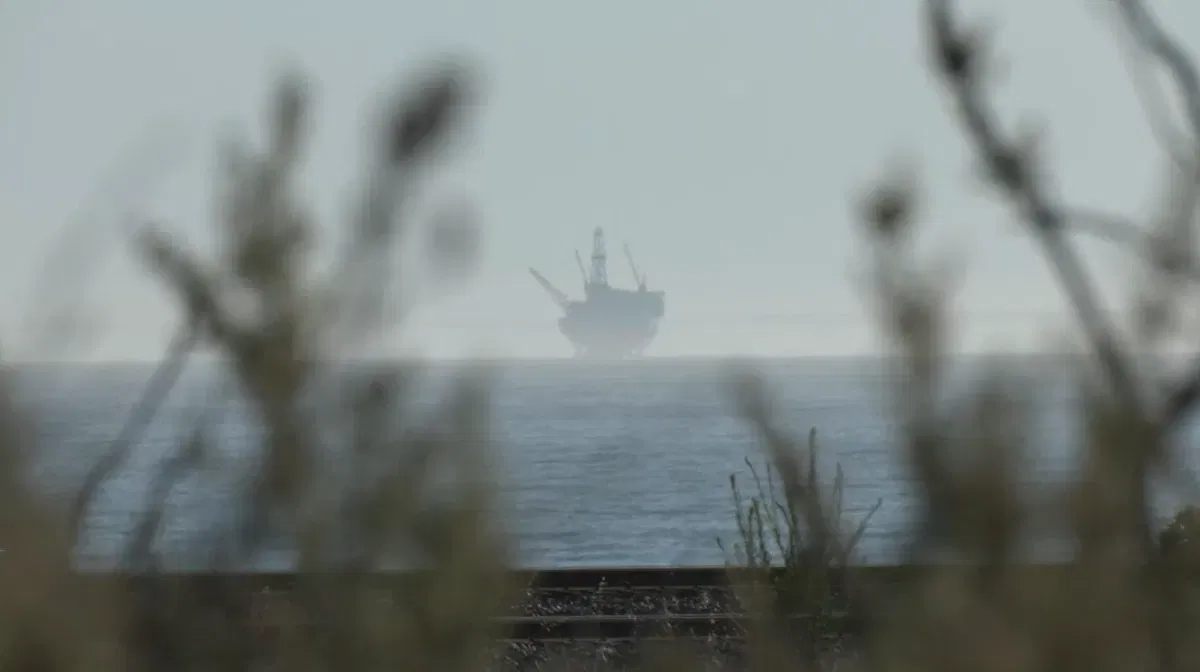

VENTURA COUNTY, Calif. (KEYT) – After the Trump Administration issued expedited approval for fracking at an oil platform off the California coast, an environmental group noted that the same company has a history of incidents, including one earlier this month at a different offshore platform.
On May 11 of this year, Your News Channel broke the news that a fire on a retired offshore natural gas platform had forced the rescue of 26 people working to decommission the aging energy infrastructure.

"I want to thank the U.S. Coast Guard, Santa Barbara Harbor Patrol, Santa Barbara City Fire Department, and the Santa Barbara and Ventura County Fire Departments for safely evacuating the crew and extinguishing the fire on Platform Habitat," stated Central Coast Congressman Salud Carbajal regarding the rescue operation. "While we await a full investigation into the cause of the fire and any potential environmental impacts, today's incident serves as a sobering reminder of the inherent risks that offshore drilling poses to our coast."
Platform Habitat, part of the Pitas Point Field, was not operational at the time of the fire and instead, has been slated for decommissioning since 2015.
The company that owns the now-expired lease for the platform installed in 1981 and is responsible for decommissioning the 20 shut-in wells at Platform Habitat is DCOR LLC.
Since the expiration of the associated lease in March of 2016, DCOR LLC has been legally required to permanently decommission Platform Habitat and related facilities within one year of the expiration.

According to federal law, leases that have continued beyond their primary term for oil and natural gas infrastructure that stop production, must restart production within 180 days or have their respective lease terminated.
"In September 2013, BSEE [Bureau of Safety ad Environmental Enforcement] granted DCOR a suspension of production, which lasted through June 2014," explained a letter from the Department of the Interior to DCOR LLC in May of 2021. "At the end of 2015, the platform producing from the leases, known as Platform Habitat, was shut in, and production ceased."

"Although BSEE may delay the expiration of a lease by granting an extension or a suspension, OCSLA [the Outer Continental Shelf Lands Act] does not provide any mechanism for BSEE to revive or reinstate a lease once it has expired," explained the Department of Interior to DCOR LLC in 2021. "Because Congress did not provide such a mechanism by statute, neither BSEE nor this Board has the discretion to reinstate a lease that has expired by operation of law."
Your News Channel has reached out multiple times to the company publicly listed as the holder of the expired lease of the natural gas platform and have not received a response, even during the emergency rescue of workers from and fire at Platform Habitat earlier this month.
Despite the requirement to decommission Platform Habitat and the inability to reinstate its lease, DCOR LLC did not begin the decommissioning process until 2025 stated environmental advocacy group Center for Biological Diversity in a letter to the Bureau of Ocean Energy Management regarding DCOR LLC's ongoing attempts to increase production from another platform off the California coast.
"Yet only in 2025—a decade since [Platform] Habitat last operated—did DCOR begin work to permanently plug the platform's 20 gas wells," noted the Center for Biological Diversity's letter to the federal government this week. "Delayed decommissioning puts worker safety and the environment at risk. Aging infrastructure readily corrodes due to constant exposure to saltwater and the elements, which can cause equipment failure and pollution."
In April of this year, the Trump Administration published its final Environmental Impact Statement approving the use of stimulation techniques, including hydraulic fracturing, at Platform Gilda, an oil platform off the coast of Ventura County and operated by DCOR LLC, under emergency powers.

"The environmental impact statement, which was prepared in 28 days from the publication of the Notice of Intent pursuant to the Department of the Interior's Alternative Arrangements for NEPA Compliance During a National Energy Emergency, incorporates technical review by BOEM subject matter experts and was guided by public feedback on the scope of the analysis," stated the Bureau of Ocean Energy Management on April 22, 2026.
According to the Center for Biological Diversity, the average time it usually takes to make such an approval is measured in years, not days.
"[T]he WST [well stimulation treatments] activities DCOR proposes in the Updated DPP [Development and Production Plan] would have significant environmental impacts, both due to the fracking activities themselves and due to extending the life of Platform Gilda's operations. The surrounding area's aquatic wildlife, air quality, water quality, terrestrial wildlife, and other environmental resources would likely be seriously harmed by fracking and continued oil production at Platform Gilda, and these impacts could continue long after the proposed WST activities end," detailed the environmental advocacy group in its letter opposing the federal environmental review. "Disapproving the Updated DPP is the only decision that would safeguard the health and wellbeing of California's coastal communities and protect the environment, which far outweighs any advantages of increased oil production at Platform Gilda."
Records from the Bureau of Safety and Environmental Enforcement show that, between 2020 and 2024, DCOR LLC facilities had 107 separate offshore incidents, including six on Platform Habitat and 17 on Platform Gilda.
The rapid approval process and safety concerns were among multiple claims submitted by the Center for Biological Diversity against the steps completed in approving an expansion of oil and natural gas production from Platform Gilda, but the one that may be familiar to residents of the Central Coast region is that these steps overriding federal law were authorized by an energy emergency declared last year by President Trump.
"Caused by the harmful and shortsighted policies of the previous administration, our Nation's inadequate energy supply and infrastructure causes and makes worse the high energy prices that devastate Americans, particularly those living on low- and fixed-incomes," argued Executive Order 14156 Declaring a National Energy Emergency issued on January 20, 2025. "Our Nation's current inadequate development of domestic energy resources leaves us vulnerable to hostile foreign actors and poses an imminent and growing threat to the United States' prosperity and national security."
On March 13, 2026, the Trump Administration ordered private energy company Sable Offshore to restart oil production off the coast of Santa Barbara County, which included the use of onshore pipelines shuttered since a massive oil spill from a ruptured pipeline in 2015 and subject to a federal court order.

Despite that agreement in federal court, which requires the Office of State Fire Marshal to manage restart plans, earlier the same month, the U.S. Department of Justice issued a slip opinion that argued the President, or a designated person, could order the Houston-based company seeking to restart oil production since purchasing the Santa Ynez Unit from ExxonMobil in February of 2024, to begin oil production immediately -skirting federal, state, and local regulatory authority- for national security purposes.
"The Trump Administration remains committed to putting all Americans and their energy security first," stated Secretary Wright at the time of the forced restart of oil production at the Santa Ynez Unit. "Unfortunately, some state leaders have not adhered to those same principles, with potentially disastrous consequences not just for their residents, but also our national security. Today's order will strengthen America's oil supply and restore a pipeline system vital to our national security and defense, ensuring that West Coast military installations have the reliable energy critical to military readiness."
Notably, the Trump Administration's order to restart did not explicitly direct crude oil from the Santa Ynez Unit for exclusive military use nor limit its destination to the nation's strategic petroleum reserve and even if it had, those national security claims do not hold up to scrutiny which has forced the federal government to intervene in court proceedings on behalf of Sable Offshore.
Those broad statements about domestic energy production and its impact on national security do not match the same Administration's actions including cutting billions in energy investments, potentially outside of its legal authority, rescinding over 3.5 million acres of offshore waters leased for energy generation and cutting deals to terminate offshore wind leases for projects on both coasts, and even spending almost a billion dollars to halt plans to build offshore wind farms, an action that is now subject to a Congressional inquiry and Freedom of Information Act requests by Your News Channel.
Indeed, in December of last year, the Trump Administration suspended all large-scale offshore wind projects nationwide, including one project that was already generating electricity, "due to national security risks" detailed in classified reports the Interior Department shared in a press release.
Developers at all five major offshore wind projects impacted by the stop-work order sued and federal courts agreed with the harms inherent in the Trump Administration's forced stops before issuing a preliminary injunction against the Department of the Interior for all five projects while the lawsuits play out in court.
These unilateral exemptions to federal laws on behalf of private oil and natural gas companies and explicit prohibition of alternative sources of energy all under the umbrella of national security are both not new and ongoing.
"Unlike some other statutes, NEPA [National Emergencies Act] does not give the President any 'special or extraordinary power' to waive its requirements during national emergencies," stated the Center for Biological Diversity in its letter to the federal government about the expedited approval of DCOR LLC's plans at Platform Gilda. "President Trump's Executive Order makes no mention of NEPA—much less 'specif[ies] the provisions' of that statute under which he wants to act during the emergency. As a result, the fact that President Trump has declared a purported 'emergency' does not give the Department [of the Interior] any additional power to disregard the ordinary requirements of NEPA. The Department must look elsewhere for authority to issue the Emergency Procedures."
Despite broad claims about the impact of domestic energy production on national security, what is considered energy was recently changed.
Section 8(a) of Executive Order 14156 redefined what the federal government functionally considers energy stating, "The term 'energy' or 'energy resources' means crude oil, natural gas, lease condensates, natural gas liquids, refined petroleum products, uranium, coal, biofuels, geothermal heat, the kinetic movement of flowing water, and critical minerals."
"[T]he Emergency Procedures [cited by the Bureau of Ocean Energy Management regarding Platform Gilda] are a transparent pretext to exempt fossil fuel development from environmental laws rather than a
response to an actual energy emergency," argued the Center for Biological Diversity. "Oil production is at an all-time high and the United States is a net exporter of petroleum. The Executive Order raises longstanding energy policy issues like energy prices and security but fails to identify any sudden or unforeseen new circumstances that might require deviation from existing laws and regulations. Instead, the Executive Order borrows talking points that the oil and gas industry has offered for years when seeking to increase drilling and production. These are nothing new. And because these issues involve long-term national energy policy, they cannot be resolved through short term steps expediting approvals of leases, development and production plans, and drilling permits."
"If there were a genuine energy emergency, the United States would be expected to take an 'all of the above' approach to increasing energy supplies," added the environmental advocacy group.
Your News Channel reached out to the Department of Defense for more information regarding the national energy emergency and its impact on domestic energy production and its response will be added to this article when they are received.
In response to Your News Channel's specific inquiries, the Department of the Interior shared the following response, "Interior remains committed to managing offshore energy resources in accordance with federal law and in a manner that protects American taxpayers while advancing the Administration's energy priorities. Interior coordinates with other federal agencies, including the Department of War, where national security interests are implicated."
