Trump Administration files to intervene on behalf of Sable Offshore in State Parks lawsuit
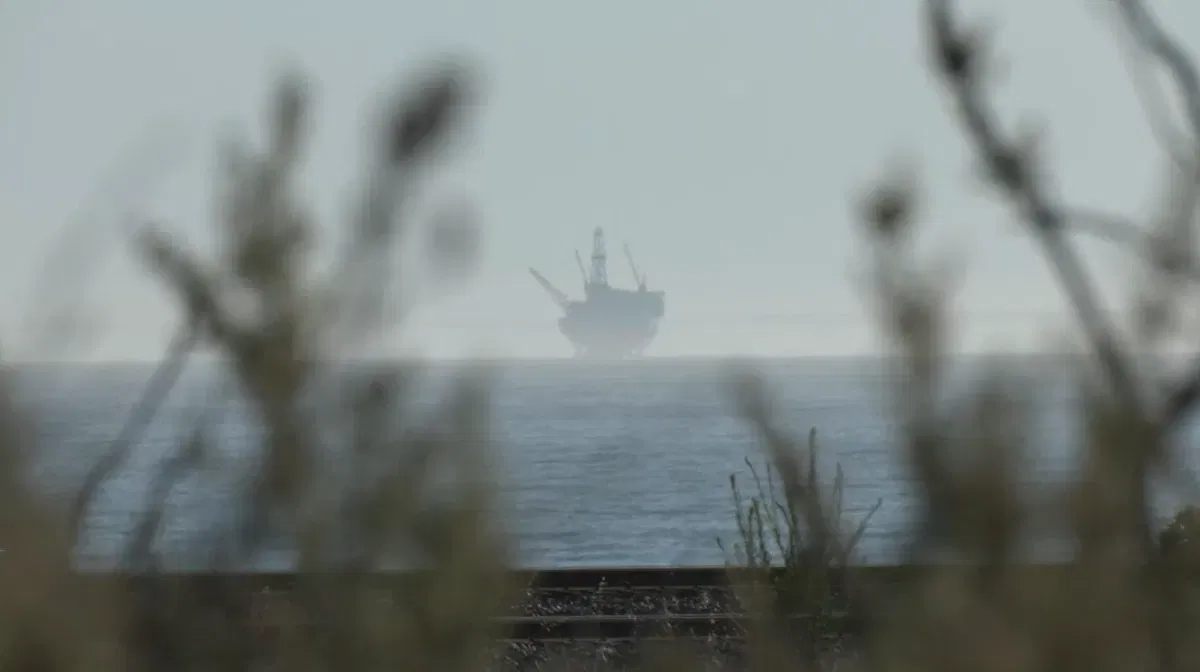

LOS ANGELES (KEYT) – The Trump Administration filed to have the Justice Department step in to defend Sable Offshore in federal court against a civil claim from State Parks regarding the use of four miles of onshore oil pipelines that run through Gaviota State Park without the proper paperwork.
"Plaintiff California Department of Parks and Recreation has filed this suit to enjoin Defendant Sable Offshore Corporation's operation of a pipeline because part of it traverses a state park," opened the motion to intervene filed by members of the U.S. Department of Justice on Tuesday, May 5, 2026. "The United States seeks to intervene to protect the supremacy of federal law and to promote the national defense and critical energy production."
On March 13, 2026, the Trump Administration ordered private energy company Sable Offshore to restart oil production, including the use of onshore pipelines shuttered since a massive oil spill from a ruptured pipeline in 2015.

The ruptured pipeline, formerly known as Line 901 and now referred to as Line CA-324, impacted 150 miles of California coastline and destroyed thousands of acres of shoreline habitats. Its sister pipeline which was also shut down at the same time, Line 325, runs from the Gaviota Coast to Pentland Station in Kern County was also restarted after the order from the Trump Administration.
The pipelines and connected oil-generating system, collectively referred to as the Santa Ynez Unit, have remained dormant since the spill and oversight of its restart has been assigned to the Office of State Fire Marshal through a federal court order.

Despite the agreement in federal court that requires the Office of State Fire Marshal to manage restart plans, earlier the same month as the forced restart, the U.S. Department of Justice issued a slip opinion that argued the President, or a designated person, could order Sable Offshore, the Houston-based company seeking to restart oil production since purchasing the Santa Ynez Unit from ExxonMobil in February of 2024, to begin oil production immediately -skirting federal, state, and local regulatory authority- for national security purposes.
According to Secretary of Energy Chris Wright, the federal government issued the order to restart oil production under the authority of the Defense Production Act of 1950 and the authority to do so was delegated to the Energy Secretary by Executive Order 13603 "National Defense Resources Preparedness".
"The Trump Administration remains committed to putting all Americans and their energy security first," stated Secretary Wright at the time of the forced restart. "Unfortunately, some state leaders have not adhered to those same principles, with potentially disastrous consequences not just for their residents, but also our national security. Today's order will strengthen America’s oil supply and restore a pipeline system vital to our national security and defense, ensuring that West Coast military installations have the reliable energy critical to military readiness."
Notably, the Trump Administration's order to restart did not explicitly direct crude oil from the Santa Ynez Unit for exclusive military use nor limit its destination to the nation's strategic petroleum reserve and even if it had, those national security claims do not hold up to scrutiny.
Sable Offshore has not responded to Your News Channel's repeated inquiries into the amount of crude oil from the Santa Ynez Unit that had been explicitly designated for use by the Department of Defense.
"[Oil produced in California] is used by the 50 military bases in California, Nevada, and Arizona. And that's the reason why Trump invoked the Defense Production Act," argued Sable Offshore's CEO Jim Flores during an interview with Fox News' Laura Ingraham after the forced restart. "He has to make sure those military bases and those sailors and airmen and so forth have fuel for their jets and their boats and so on."
"Restarting the flow of oil through Lines CA-324/325 does not fix any of these purported problems," stated Attorney General Bonta in his March lawsuit. "Defendants' national defense and national energy emergency justifications are patently unreasoned. To the contrary, the offshore platforms have a maximum expected gross oil rate of 50,000 barrels per day, contributing a fraction of a percent to the domestic energy market. Although international conflict has driven up oil prices globally by reducing oil exports from the Middle East, there is no actual shortage of crude oil in the United States; the incremental oil production the Wright Order directs would thus neither address a shortage (because there is none) nor lower the cost of crude oil in the United States (because this miniscule incremental production would not have an impact on the global price of oil). And even if there were any marginal benefit to the "national defense," it would be vastly outweighed by the environmental and safety risks, as well as the unlawful and unconstitutional displacement of the State’s police powers and the intrusion upon the State's sovereign property rights."
Before the forced restart, Sable was complying with the conditions of the federal consent decree with state agencies up until late last year.
The company submitted a Request for Approval of Restart Plans in September of 2025 to the California Office of State Fire Marshal in accordance with the federal consent decree and the state safety regulator found that there were still outstanding steps required before approving a restart.
Instead of conducting the requested safety corrections, Sable Offshore informed investors in December of last year that it had determined that pipelines connecting the onshore oil processing plant on the Gaviota Coast to Pentland Station in Kern County are technically interstate pipelines under the Pipeline Safety Act and requested that federal regulators take over its restart plans.
That designation of intrastate pipelines (meaning they are inside of one state) versus interstate pipelines (meaning they cross into multiple states) was specifically established through the same federal consent decree, rendering the onshore pipelines that cross through three California counties subject to state jurisdiction exclusively.
One of the state agencies involved with the restart of onshore pipelines is the California Department of Parks and Recreation.
"Since 2016, State Parks has issued annual Right of Entry ("ROE") permits to Sable's predecessors-in-interest or companies affiliated with Sable that have allowed them to access Gaviota State Park in order to physically access the Pipeline and perform minimal maintenance on the Pipeline," detailed the California Department of Parks and Recreation in a March 2026 civil filing against Sable Offshore. "Those permits are necessary because...Sable does not have an easement that would otherwise allow it to access the Park."
During pipeline safety checks and repairs conducted last year, 18 pipeline anomalies were detected along the four-mile-long section of pipeline within the borders of Gaviota State Park.
The image below shows the part of the small section of pipelines that pass through Gaviota State Park on the lower left-hand side and the detected pipeline anomalies are identified as the blue circles with the pipeline in question, Line 325a, shown as the green line.

"On May 8, 2025, State Parks issued a separate ROE permit to PPC that allowed it to perform eighteen 'anomaly' digs along the segment of the Pipeline that runs through Gaviota State Park," stated the civil filing by the state agency. "The purpose of these digs was to expose the Pipeline in certain locations to allow a physical inspection of it and to determine if repairs of the Pipeline were needed."
"The permit expired on August 8, 2025," noted the California Department of Parks and Recreation. "As a consequence of the failed rehabilitation and lack of reseeding, the dig areas at issue are currently overgrown with invasive mustard, which is the environmental impact that the ROE permit condition aimed to prevent."
According to State Parks, Sable was informed of the steps necessary to secure an easement needed to restart the flow of oil through the pipeline subject to its jurisdiction on more than one occasion last year.
"Rather than pursuing an easement as State Parks had recommended, Sable initially pursued an ROE permit to perform the anomaly digs [last year]," shared the state agency before concluding, "Sable does not currently have any easement rights or other property rights that would allow it to transport oil through Gaviota State Park (or to leave its Pipeline in the Park)."
The day after the executive order directing a restart, the California Department of Parks and Recreation officially declined Sable Offshore's easement request regarding the four-mile pipeline segment that runs through Gaviota State Park before demanding the immediate removal of pipelines from the state agency's jurisdiction.
"Section 8 of the temporary pipeline easement granted to Sable’s predecessor, Celeron Pipeline Company, which expired in 2016 ("Expired Easement"), attached hereto, authorizes State Parks to demand Sable to remove the pipeline and restore the property to its original condition after the end of the term," stated the California Department of Parks and Recreation in a letter to Sable Offshore on March 14, 2026. "This letter demands immediate removal of the pipeline on State Parks' property pursuant to section 8 of the Expired Easement. State Parks has determined that due to Sable’s excessive drain on state resources and incompatibility of their project with the park unit, State Parks will not be granting Sable an easement to continue to use Gaviota State Park for its oil pipeline operations. Additionally, although, State Parks has discussed the possibility of an easement with Sable, all prior permissions and discussions have been premised on the requirement that Sable comply with all applicable state laws and obtain all applicable state approvals, and Sable has now indicated that it has begun or imminently intends to begin restarting operations without adhering to those requirements or obtaining permission to use the State of California's land."
On Monday, March 16, the California Department of State Parks and Recreation added that, "Sable has shown that it does not intend to comply with State Parks' demand and we will be taking further action."
The state agency filed its civil suit regarding the unmet conditions in Santa Barbara County Superior Court the following day and the case was moved to federal court in Los Angeles on March 19, 2026.
"[T]he Secretary of Energy, acting under delegated authority granted by Congress to the President via the Defense Production Act, has ordered Sable to operate that pipeline to satisfy critical national security needs," argued the Justice Department in its filing to intervene on behalf of Sable this week. "The Secretary issued that order because he determined that production through the pipeline was necessary to address U.S. energy vulnerabilities and shortages that threaten our national security. The state is thus attempting to use state law to override a federal action that protects national security and military readiness."
A lawsuit filed by Attorney General Bonta on May 1 of this year argued that the Defense Production Act was never intended to circumvent the law and instead written to prioritize defense production over civilian projects.
"Section 101(a) [of the Defense Production Act of 1950] is not a blank check for the Executive to do whatever it wants," stated the May 1, 2026, lawsuit. "The twice-repeated word 'priority'—and the phrase 'in preference to other contracts or orders' [from the Defense Production Act of 1950]—makes
plain what is meant: If an entity has multiple contracts or orders, section 101(a) allows the federal government to determine which should be fulfilled or accepted before others—for instance, by ordering Sable to fulfill orders for military suppliers before civilian suppliers."
The fact that there were no competing civilian contracts for crude oil from the Santa Ynez Unit was noted by the Attorney General.
"That is an important power [granted by the Defense Production Act of 1950], since the national defense may sometimes require prioritizing defense consumption above non-defense consumption, notwithstanding existing private contracts," Attorney General Bonta explained in the state's lawsuit. "DOE [U.S. Department of Energy] purports to order Sable, under the Wright Order, to transport oil when it otherwise would have fulfilled no contracts at all because of prohibitions under court orders and state law. Sable is 'directed to accept and perform such contracts' not in priority to other contracts, but as an absolute matter."
Sable Offshore and the Trump Administration have stated the forced restart circumventing federal, state, and local laws is justified by a national security-related energy emergency, but getting oil from the Santa Ynez Unit to market has an added benefit for the company.
In late March, Your News Channel confirmed that Sable had sold crude oil from the Santa Ynez Unit to Chevron and in an 8-K filing with the U.S. Securities and Exchange Commission published Wednesday, May 6, Sable Offshore confirmed it had, "Successfully resumed sales of American oil from the Santa Ynez Unit in accordance with the Defense Production Act order from the U.S. Department of Energy."
The fact that at least Chevron and potentially other private purchasers are buying oil from the Santa Ynez Unit has a substantial impact outside of the claims made by supporters of its restart.
Court documents show that Sable initially secured a $622,000,000 loan from ExxonMobil to fund the purchase of the Santa Ynez Unit from the oil giant.
That line of credit had a very important condition.
Ownership of the Santa Ynez Unit would revert back to ExxonMobil unless oil from the Santa Ynez Unit under Sable's management entered the open market.

That deadline and impact of sales were noted not just by Your News Channel author, but also by California's Attorney General Rob Bonta when the state filed a lawsuit regarding the forced restart in mid-March.
"As a condition of the acquisition [of the Santa Ynez Unit], if Sable did not restart production by January 1, 2026, ExxonMobil had the right of reversion," stated the state's lawsuit in mid-March. "[T]he Wright Order [directing a restart] does not say, and no public information indicates, that Sable holds a Title I government contract or that Sable is required to sell its crude to the government in a Title 1 contract. The Wright Order also fails to state where, or to whom, Sable will sell the crude oil it produces."
The focus on selling crude oil from the Santa Ynez Unit was cited by the Justice Department when it argued that it should be allowed to argue the case on behalf of Sable Offshore.
"The United States has broader interests than a private party, and Defendants cannot adequately represent those interests...They [Sable Offshore] are understandably focused on economic and other business interests," noted the U.S. Department of Justice in Tuesday's filing to intervene. "In contrast, the United States's interests are rooted in its 'obligations . . . to the general public' through its role in enforcing compliance with the Constitution, maintaining the supremacy of Federal law, and ensuring domestic energy production that meets the needs of the national defense."
Despite numerous references by both the Trump Administration and Sable Offshore about the necessity of producing crude oil from the Santa Ynez Unit for an explicitly national security purpose, there has been no public indication any amount of crude oil from the Santa Ynez Unit has been specifically provided or sold to the Department of Defense nor defense contractors.
Additionally, the broad statements about domestic energy do not match the same Administration's actions including cutting billions in energy investments, potentially outside of its legal authority, rescinding over 3.5 million acres of offshore waters leased for energy generation and cutting deals to terminate offshore wind leases for projects on both coasts, and even spending almost a billion dollars to halt plans to build offshore wind farms, an action that is now subject to a Congressional inquiry.
Indeed, in December of last year, the Trump Administration suspended all large-scale offshore wind projects nationwide, including one project that was already generating electricity, "due to national security risks" detailed in classified reports the Interior Department shared in a press release.
Developers at all five major offshore wind projects impacted by the stop-work order sued and federal courts agreed with the harms inherent in the Trump Administration's forced stops before issuing a preliminary injunction against the Department of the Interior for all five projects while the lawsuits play out in court.
These unilateral exemptions to federal laws on behalf of private oil and natural gas companies and explicit prohibition of alternative sources of energy all under the umbrella of national security are both not new and ongoing.
"The pipeline operator [Sable Offshore] then relied on the [U.S. Secretary of Energy] Wright Order, and a contemporaneous opinion from the U.S. Department of Justice's Office of Legal Counsel, to argue that any state laws or existing court orders standing in the way of restart could be ignored and set aside," detailed the Attorney General's lawsuit. "The very next day, on March 14, 2026, the pipeline operator restarted pumping oil through pipelines despite an outstanding preliminary injunction in state court, despite not having necessary permits from either the state or the federal government for pipeline operation, despite still not having approval from several state agencies, and despite not having a current or valid easement to keep or utilize the segment of its pipeline crossing California state property."
That note about a current or valid easement is the topic of this week's intervention by the Justice Department and all parties involved in the State Park's civil suit are due back in court on June 8 of this year.
"[T]he relief Plaintiff [California State Parks] seeks here would undermine the Secretary's action and stymie the needed production based on state trespass law," argued the Department of Justice in its motion to intervene. "Plaintiffs are thus attempting to undermine the supremacy of federal law and our national security, and the United States has a significant interest in preventing that effort."
