Attorney General Challenges Legality of Trump Administration’s Special Permit for Sable Offshore
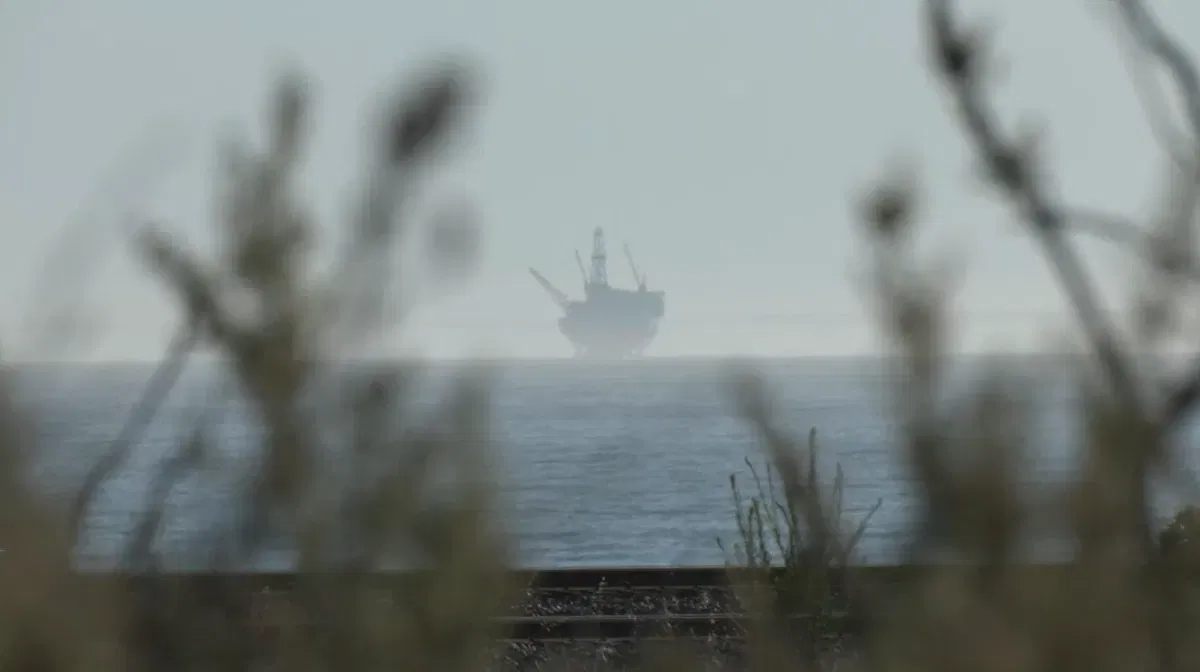

SAN FRANCISCO (KEYT) – California's Attorney General filed a lawsuit challenging the legality of an order issued by the Trump Administration waiving the restart conditions for local oil pipelines detailed in a federal court order.
The petition, which names the Department of Transportation's Pipeline and Hazardous Materials Safety Administration and its leadership as defendants, was filed in the 9th Circuit Court of Appeals Monday.
"This Petition challenges as unlawful PHMSA's [the Pipeline and Hazardous Materials Safety Administration] June 25, 2026 order granting a 'Special Permit' (the 'Special Permit'), designated Docket Number PHMSA2026-0464, to Sable Offshore Corp.," opened Monday's Petition. "The Special Permit was accompanied by other documents entitled Analysis and Findings, Jurisdictional Determination, and Finding of No Significant Impact, (collectively, the 'Related Documents'). The Related Documents were all prepared in support of the Special Permit and all issued the same date (June 25, 2026)."

After the purchase of the Santa Ynez Unit, which includes onshore pipelines shuttered since a massive oil spill from a ruptured pipeline in 2015, Sable Offshore was complying with the conditions of a federal court order which required the Houston-based energy company to cooperate with state agencies for a restart of the pipelines up until late last year.
The corroded onshore pipeline, formerly known as Line 901 and now referred to as Line CA-324, spilled over 100,000 gallons of oil across 150 miles of California coastline, destroying thousands of acres of shoreline habitats.

In September of last year, Sable Offshore submitted a Request for Approval of Restart Plans to the California Office of State Fire Marshal in accordance with the consent decree agreed to by the previous operator of the onshore pipelines.
The state safety regulator found that there were still outstanding steps required before approving restart the next month.
"Our focus remains on one priority: protecting public safety," stated Chief Daniel Berlant with the California Office of State Fire Marshal in a press release Monday. "Our pipeline safety requirements are rigorous, grounded in engineering and risk reduction, and designed to safeguard communities and the environment."
Instead of conducting the requested safety actions, Sable Offshore instead informed investors in December that it had determined that pipelines connecting the onshore oil processing plant on the Gaviota Coast to Pentland Station in Kern County are technically interstate pipelines under the Pipeline Safety Act and requested that federal regulators take over its restart plans.
Notably, while jurisdiction over the onshore pipelines was being debated, Sable Offshore shared with investors in an 8K filing with the U.S. Securities and Exchange Commission that it had not made any additional capitol investments into onshore facilities and pipelines including the corrective actions recommended by the Office of State Fire Marshal.
Despite the court order, safety concerns, and location of the pipelines, the Department of Transportation agreed with Sable Offshore's assessment and promptly asserted its authority over restart plans in mid-December.
"PHMSA further notes that the jurisdictional status of Lines CA-324 and CA-325 has changed since the District Court entered the Consent Decree," the Department of Transportation noted when issuing its June 2026 Special Permit to Sable Offshore. "PHMSA has since determined that Lines CA-324 and CA-325 are part of an interstate hazardous liquid pipeline facility. Accordingly, PHMSA has the sole and exclusive authority to issue the special permit for Lines CA-324 and CA-325 that Sable has requested in this proceeding."
That dismissal of the federal court's determination that the pipelines are intrastate was challenged directly in Monday's filing.
"Petitioner also challenges the Jurisdictional Determination to the extent that it constitutes a separate order or action and supersedes PHMSA's December 17, 2025, order purporting to assume exclusive federal jurisdiction over the Las Flores Pipelines," stated the Petition for Review.
On March 13, 2026, the Trump Administration ordered the private energy company to restart oil production despite the unmet conditions of the federal court order and on June 25, 2026, issued a new special permit for operation of the associated onshore pipelines.
While the agreement in federal court required state regulators to manage restart plans at the Santa Ynez Unit, Secretary of Energy Chris Wright argued that the federal government forced the restart of oil production due to an energy emergency declared in the first month of President Trump's second term and under the authority of the Defense Production Act of 1950.
"PHMSA notes that the Secretary of Energy issued the DPA [Defense Production Act of 1950] Order separately from PHMSA's consideration of Sable's special permit request, and that PHMSA does not have authority to ignore, override, or otherwise nullify the DPA Order," offered the Department of Transportation when issuing a Special Permit to Sable Offshore in June of this year. "PHMSA further notes that 49 CFR 190.341(g) defines emergency as an event that may be: local, regional, or national in scope and includes significant fuel supply disruptions and natural or manmade disasters such as hurricanes, floods, earthquakes, terrorist acts, biological outbreaks, releases of dangerous radiological, chemical, or biological materials, war-related activities, or other similar events...PHMSA determined that granting the ESP [initial Emergency Special Permit] was consistent with the requirements in the Pipeline Safety Act given the national energy emergency declared by the President in E.O. 14156 [Executive Order 14156 issued on January 20, 2025]."
"[D]ue to the issuance of the DPA Order, the restart of the pipeline has already safely occurred, and PHMSA's special permit does not displace or nullify the DPA Order's requirement that Sable operate the SYPS," added the federal safety regulator.
Notably, the Trump Administration's order to restart did not explicitly direct crude oil from the Santa Ynez Unit for exclusive military use nor limit its destination to the nation's strategic petroleum reserve and even if it had, those national security claims do not hold up to scrutiny Your News Channel found.
"[Oil produced in California] is used by the 50 military bases in California, Nevada, and Arizona. And that's the reason why Trump invoked the Defense Production Act," argued Sable Offshore's CEO Jim Flores during an interview with Fox News' Laura Ingraham in march. "He has to make sure those military bases and those sailors and airmen and so forth have fuel for their jets and their boats and so on."
Despite those claims, Sable Offshore has failed to provide any direct indication that it has fulfilled a single Department of Defense fuel request even after repeatedly asked by Your News Channel.
"The pipeline operator [Sable Offshore] then relied on the [U.S. Secretary of Energy] Wright Order, and a contemporaneous opinion from the U.S. Department of Justice's Office of Legal Counsel, to argue that any state laws or existing court orders standing in the way of restart could be ignored and set aside," detailed one of multiple lawsuits filed by California's Attorney General in response to the forced restart. "The very next day, on March 14, 2026, the pipeline operator restarted pumping oil through pipelines despite an outstanding preliminary injunction in state court, despite not having necessary permits from either the state or the federal government for pipeline operation, despite still not having approval from several state agencies, and despite not having a current or valid easement to keep or utilize the segment of its pipeline crossing California state property."
The State Lands Commission noted that an announcement from Sable Offshore about restarting oil production in May of last year and a lack of advanced notice about the public statements violated the terms of the agency's leases held by Sable Offshore regarding the Santa Ynez Unit.
Additionally, an easement through State Park's property is necessary to resume the use of the section of pipeline in Gaviota State Park Your News Channel noted back in January and, according to reporting by Politico, Sable Offshore has repeatedly asked the Trump Administration to use eminent domain to seize properties associated with onshore pipelines to avoid those and other claims.
"This is a significant achievement for the Interior Department and aligns with the Administration's Energy Dominance initiative, as it successfully resumed production in just five months," stated the U.S. Department of Interior in July of 2025. "With production now underway at Sable's Platform Harmony, the Interior's Bureau of Safety and Environmental Enforcement (BSEE) continues to work with Sable to bring additional production online."
The public announcement in May of last year by Sable Offshore and echoed by the Trump Administration about restarting production also resulted in an investor rights law firm to file one of multiple class action lawsuits on behalf of purchasers of Sable Offshore securities in July of 2025, and triggered an ongoing investigation by federal regulators and prosecutors the energy company later revealed to investors.
The Department of Transportation argued when issuing June's Special Permit that Sable's previous partial compliance with pipeline safety requirements demonstrated that the energy company, "has and will improve the safety of the pipeline segments" regardless of state and federal law.
Some of the repair work completed last year is also subject to civil charges brought by the California Attorney General and criminal charges brought by the Santa Barbara County District Attorney's Office.
"We just want them to follow the law," argued Sable Offshore CEO Jim Flores during an interview last in March on Fox News. "But that doesn't happen in California. You have to defend yourself. And the aspect is, the more of this going on is running so many people out of the state. And we're one of the few people investing in the state and trying to help it."
Before Monday's filing, Attorney General Bonta filed multiple lawsuits in federal court, arguing that orders issued by federal regulators about restarting oil pipelines including taking over exclusive regulatory authority of restart plans on Dec. 17, issuing an approval of restart plans on Dec. 22, and granting an Emergency Special Permit to restart pipelines on Dec. 24, were all unlawful.
"The Wright Order is an affront to, and usurpation of, the traditional police powers delegated to the states, in that it seeks to override any and all California laws that stand in the way of the restart of the Pipelines," stated a March 2026 lawsuit challenging the forced restart filed by the state's Attorney General. "The Wright Order also does not allege that Sable is part of a national energy program or a national defense program...The Wright Order also fails to provide any rational basis that connects how ordering Sable to 'require acceptance and prioritize performance' [a quote from the Defense Production Act] of 'contracts' or 'allocations' would promote the national defense with respect to energy. The Secretary fails to rationally explain why the Wright Order only favors Sable, nor does it provide any credible information to support the restart of Sable’s pipeline in a manner that is 'immediate' and circumvents state and federal law, as well as existing court orders."
In addition to those multiple legal claims from the state of California, the County of Santa Barbara, investors, and environmental groups, a Congressional inquiry was launched late last month alleging financial ties between Sable Offshore's leadership and President Trump's campaigns.
"Executives at Sable have directly contributed to President Trump's campaigns...contributed over $300,000 to Super PACs like Right to Rise USA and Senate Leadership Fund which made contributions to President Trump’s 2016 and 2024 campaigns. Additionally, Gregory Patrinely, Executive Vice President and CFO of Sable, contributed thousands of dollars to Trump-aligned committees in 2020 and 2024," stated a letter from members of Congress to Sable Offshore's CEO. "During his campaign, President Trump promised to reverse environmental rules for your industry in exchange for $1 billion in donations. It is difficult to avoid the inference that actions like the use of DPA [Defense Production Act] to overcome state laws on behalf of an oil producer represents a fulfillment of that 'pay to play' promise."

(Photo Credit: Beth Farnsworth/KEYT)
"California being the poster child for having a self-inflicted energy emergency," argued Secretary of the Interior Doug Burgum in early June. "We're for a solution that gets more affordability, protects the environment and helps national security. If people are opposed to this then they would be on the side of higher prices for Californians and less national security, and more dependence on foreign oil."
Those broad statements about a domestic energy crisis do not match the same Administration's recent actions including cutting billions in energy investments, potentially outside of its legal authority, rescinding over 3.5 million acres of offshore waters leased for energy generation and cutting deals to terminate offshore wind leases for projects on both coasts, and even spending almost a billion dollars to halt plans to build offshore wind farms, an action that is now subject to a Congressional inquiry, a lawsuit filed by the state's Attorney General last week and multiple Freedom of Information Act requests by Your News Channel author.
The resumption of oil production at the Santa Ynez Unit also has a notable impact on who will own the oil production infrastructure going forward.
Court documents showed that Sable Offshore initially secured a $622,000,000 loan from ExxonMobil to fund the purchase of the Santa Ynez Unit from the oil giant.
The line of credit had a pivotal condition.
Ownership of the Santa Ynez Unit would revert back to ExxonMobil unless oil from the Santa Ynez Unit under Sable's management enters the market.
Sable stated in a press release after the forced restart that it made its first sales of oil on April 1 of this year to a private oil company at an expected gross oil rate of 50,000 barrels of oil per day and therefore, retain ownership of the Santa Ynez Unit going forward.
A spokesperson on behalf of ExxonMobil declined to comment on the change in ownership indirectly facilitated by the Trump Administration when reached for clarification and Sable Offshore has not responded to questions about the change in ownership despite multiple requests for more information by Your News Channel.
That change in ownership directly facilitated by a forced restart by the Trump Administration was something noted in one of Attorney General Bonta's lawsuits, "Sable was and remains undercapitalized. As a condition of the acquisition, if Sable did not restart production by January 1, 2026, ExxonMobil had the right of reversion," and noted by the Pipeline and Hazardous Materials Safety Administration when it issued a Special Permit to Sable Offshore in June arguing, "negative commenters questioned the trustworthiness of Sable as an operator due to investigations and enforcement proceedings conducted by other governmental entities. They also stated that restart was rushed due to financial deadlines faced by the operator...due to the issuance of the DPA Order, the restart of the pipeline has already safely occurred, and PHMSA's special permit does not displace or nullify the DPA Order's requirement that Sable operate the SYPS [Santa Ynez Pipeline System]."
"California's coastline is not for sale to enrich the President’s fossil fuel friends," argued Attorney General Bonta in a press release Monday. "No matter how many times the Trump Administration attempts to help Sable evade state regulation, my office will see them in court at every illegal turn and continue to protect California's communities and environment."
