Trump Administration opinion cites national security as justification to waive federal, state and local laws slowing oil production restart
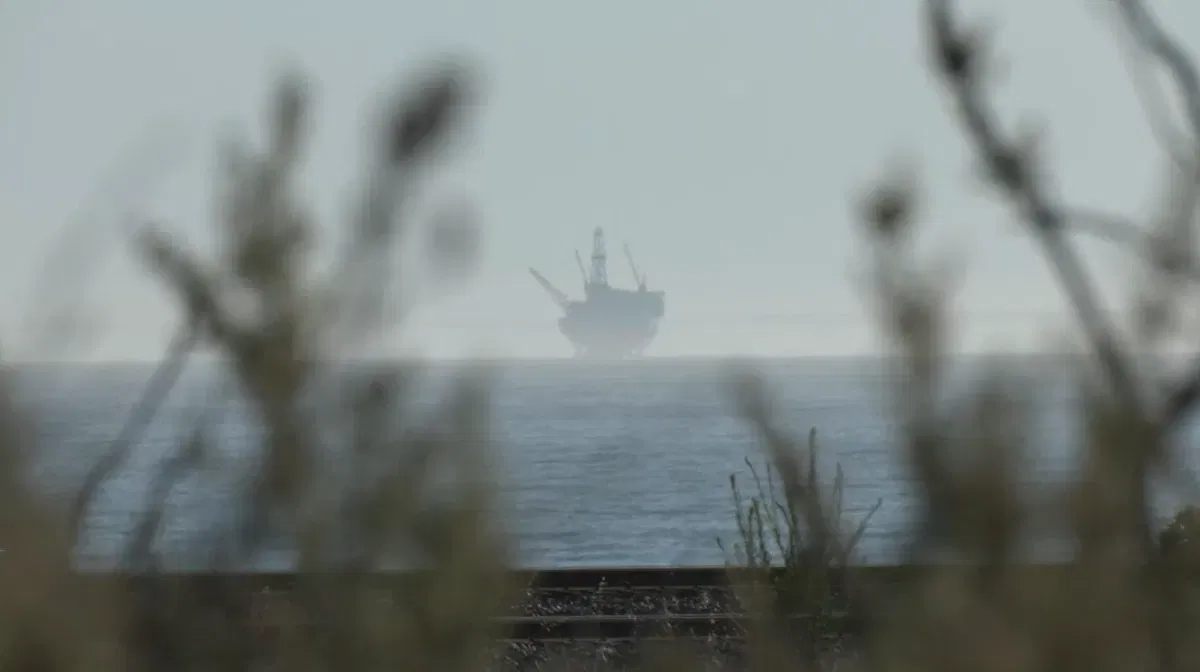

SANTA BARBARA COUNTY, Calif. (KEYT) – The Department of Justice issued an opinion this week stating that the Trump Administration can use a Cold War-era law to circumvent all legal and regulatory hurdles preventing a restart of oil production locally.
The slip opinion, authored by Assistant Attorney General T. Elliot Gaiser, argues that the President can issue an order under the Defense Production Act of 1950 (DPA) to Sable Offshore, the Houston-based company seeking to restart oil production since purchasing oil production infrastructure from ExxonMobil in February of 2024.
"You have asked whether an order issued under the Defense Production Act of 1950 ("DPA" or "Act"), Pub. L. No. 81-774, 64 Stat. 798 (codified as amended at 50 U.S.C. § 4501 et seq.), to Sable by the President or his delegee would preempt the California laws currently impeding Sable from resuming production and operating the associated pipeline infrastructure," opened the opinion dated March 3, 2026. "We conclude that it would."
In 2024, court documents show that Sable secured a $622,000,000 loan from ExxonMobil to fund the purchase of offshore and onshore oil production infrastructure that is collectively referred to as the Santa Ynez Unit.

Since an oil pipeline rupture in 2015, oversight of any plans to restart onshore pipelines needed to transport oil from the Las Flores Canyon Facility on the Gaviota Coast -which receives and processes oil from offshore platforms- has been assigned to the Office of State Fire Marshal through a court order.
The pipeline that ruptured, formerly known as Line 901 and now known as Line CA-324, has remained dormant since its rupture in May of 2015, spilling an estimated 450,000 gallons of crude oil over 150 miles of California coastline and destroying thousands of acres of shoreline habitats.

"Ever since a catastrophic oil spill at Refugio Beach in 2015 led to a court-ordered consent decree, CAL FIRE - Office of the State Fire Marshal has been responsible for overseeing the repair of the lines that caused the spill, which are now operated by Sable Offshore Corp in Santa Barbara County," shared Daniel Villaseñor with the California Natural Resources Agency.
Tuesday's Justice Department opinion didn't limit itself to the role that California could play in regulating the restart of oil production locally. It included federal regulations as well as the existing Consent Agreement in its findings.
"We have been advised that, in addition to the United States and various State of California entities, Sable is a party to the Consent decree as a result of an acquisition," noted the opinion. "[A]n executive order under the DPA would displace these provisions of the Consent Decree, even though there are both federal- and state-law claims at issue in that case."
The opinion then argued that, "the President can displace impediments to productive capacity when necessary" and that the use of the Defense Production Act of 1950 to force Sable to restart production would qualify as an, "event arising from causes beyond the control of Defendants".
That allowance of an "event" comes from the existing Consent Decree agreed to by the former owners of the Santa Ynez Unit.
Because the agreement made in federal court after the oil spill can be modified to comply with federal law, "a DPA order has the force of federal law. If a DPA order requires Sable to take an action that is prohibited by the Consent Decree, the Consent Decree likely must be modified" stated Tuesday's opinion.
"This is bigger than any one oil project," argued Chief Counsel for the Environmental Defense Center, Linda Krop Thursday. "Anyone who cares about state sovereignty, law and order, and our environment should be outraged."
In September of last year, Sable Offshore submitted a Request for Approval of Restart Plans, which involved the onshore pipelines, to the California Office of State Fire Marshal in accordance with the consent decree agreed to by the previous owner of the pipelines.
The state safety regulator found that there were still outstanding steps required before approving restart the following month.
In response, Sable Offshore informed investors in December of last year that it had determined that pipelines connecting the onshore oil processing plant on the Gaviota Coast to Pentland Station in Kern County are technically interstate pipelines under the Pipeline Safety Act and requested that federal regulators take over its restart plans.
The Department of Transportation's pipeline safety regulator argued that the restart plans were subject to emergency permitting based on a national energy emergency declared by President Trump last year which could bypass normal regulatory steps.
According to an 8-K filing with the U.S. Securities and Exchange Commission, the U.S. Department of Transportation Pipeline and Hazardous Materials Safety Administration informed the Houston-based energy company that it had approved its restart plans for Line CA-324 and Line CA-325 on Dec. 22, 2025.
Days after the approval, environmental advocacy groups filed an emergency lawsuit seeking to block the approval, but the federal court declined to issue a stay on federal approval of restart plans.
Despite the decision to not immediately halt the restart process, the court did grant that the lawsuit would receive expedited processing and, during court proceedings in early January, legal representatives of Sable Offshore admitted that oil production had not restarted at both offshore and onshore pipelines, opening the onshore pipelines up to a recently passed state law.
The new state law, SB 237, would require Sable Offshore to request a coastal development permit among other steps from the California Coastal Commission to conduct any, "Repair, reactivation, and maintenance of an oil and gas facility, including an oil pipeline, that has been idled, inactive, or out of service for five years or more".
Those specifications only apply to shuttered onshore pipelines in Santa Barbara and Kern counties.
During the flurry of approvals and litigation in late December of last year, the California Coastal Commission noted that it had not waived its right under the Coastal Zone Management Act to review the federal regulator's decision to reclassify pipelines and assume authority over restart plans.
The state regulator added that the federal government's expedited approval is also subject to review of compliance under Subpart E of the Coastal Zone Management Act, through the National Environmental Policy Act, as well as through Appendix D of the Consent Decree in U.S. et al v. Plains All American Pipeline, LP and Plains Pipeline, the same court decision agreed to after the 2015 Refugio Oil Spill and referenced in Tuesday's Justice Department opinion.
The Coastal Commission's insistence on a 30-day review period joins other state agencies noting that the restart process still has outstanding steps with other California regulators.
According to California State Parks, an easement for Gaviota State Park is also necessary to restart production and has not been granted for CA-325 which runs through the state agency's jurisdiction.
In addition to those remaining regulatory hurdles currently barring a restart, Sable is also facing civil charges brought by the California Attorney General and criminal charges brought by the Santa Barbara County District Attorney's Office regarding its already completed pipeline repair work.
Further complicating Sable's restart plans was the decision by the County of Santa Barbara's Board of Supervisors to not transfer permits the day before the Department of Transportation publicly shared that it had taken over oversight of the restart process from state safety regulators.

"[A]ccording to Sable, the State of California is impeding it from resuming transportation of SYU production through the Santa Ynez Pipeline System. Sable reports that 'California agencies have deployed an array of state measures—including SB 237, the state waiver process, novel interpretations of state agency jurisdiction and authority, excessive delay in granting a long-term easement through a state park for an existing pipeline, and the Restart Plan requirements under [a] Consent Decree—to block pipeline operations," detailed Tuesday's opinion from the Department of Justice. "Sable has thus requested the Secretary of Energy ("Secretary") to make necessary findings under the DPA [Defense Production Act of 1950] and issue an order 'requiring Sable to operate the Santa Ynez Unit and the Santa Ynez Pipeline System to maximize domestic energy production.'"
Tuesday's opinion then went on to argue that due to the natural security issues at stake regarding a restart of oil production in Santa Barbara County, the use of the Cold War-era law was not only applicable, it waived all of Sable's liability over production plans in perpetuity.
"[S]ection 4511 [of the Defense Production Act of 1950] authorizes the President to control the distribution of materials, services, and facilities, and to require entities to prioritize the performance of some contracts over others, as 'necessary or appropriate to promote the national defense' or 'to maximize domestic energy supplies'." noted the Justice Department opinion. "[T]he DPA makes explicit that orders issued pursuant to the Act displace state-law liability. It provides that "[n]o person shall be held liable for damages or penalties for any act or failure to act resulting directly or indirectly from compliance with a rule, regulation, or order issued pursuant to this chapter."
"Such immunity from liability exists even when the related DPA rule, regulation, or order is subsequently 'declared by judicial or other competent authority to be invalid'," added the opinion before further insulating a potential emergency order by the President stating that, "a finding of necessity is likely immune from judicial review under the Administrative Procedure Act ("APA") and other statutes, even if the Secretary [of Energy] makes the determination by exercising delegated presidential power."
The broad, emergency national security authority that the Justice Department's opinion affords the President includes not just the power to preempt all state and local laws as well as eliminate back-end liability for Sable Offshore, it also asserts that, "the President may determine how and to what degree to allocate productive capacity. That discretion necessarily entails the authority to compel production, not just to allocate materials that already exist."
Tuesday's opinion does note that, "the precise preemptive scope of a presidential order would depend upon the language employed in relation to the obligations imposed by state law. We cannot opine on the preemptive reach of an order not yet drafted."
The opinion goes further to argue that even without explicit authorization of a national security need, "section 4511(c) [of the Defense Production Act of 1950] allows the President to preempt state law by wielding the allocation and prioritization powers 'to maximize domestic energy supplies'—even in the absence of a national-defense finding."
"Even in these unprecedented times, this abuse of executive power would be staggering," shared Environmental Defense Center's Chief Counsel Linda Krop regarding Tuesday's Justice Department memorandum. "The federal administration is threatening to prop up a company that has flouted the law and failed to make necessary repairs identified by state regulators. Restarting this defective pipeline without following any state or federal safety laws would directly threaten our environment, our economic security, and the health and safety of Californians."
