Trump Administration directs Sable Offshore to restart oil production in Santa Barbara County
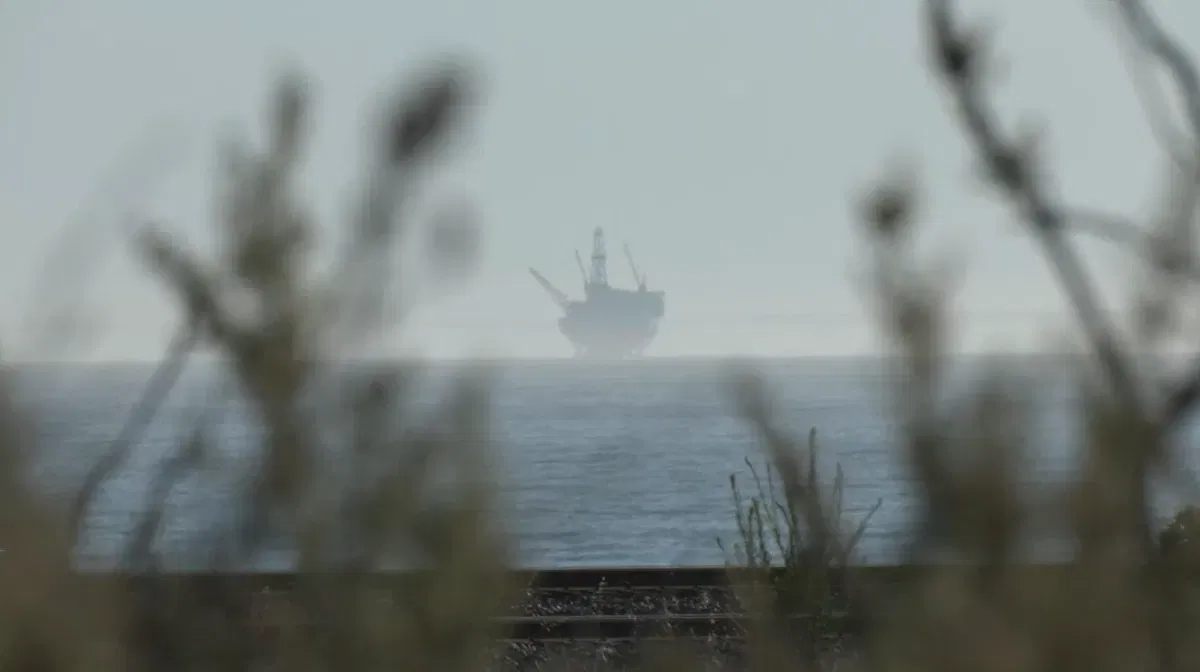

WASHINGTON D.C. (KEYT) – On Friday, the Trump Administration stated it has directed Sable Offshore to restart oil production, including the use of onshore pipelines, in Santa Barbara County.
According to the Secretary of Energy Chris Wright, the federal government issued the order to restart production under the authority of the Defense Production Act of 1950 and delegated to the Energy Secretary by Executive Order 13603 "National Defense Resources Preparedness".
"The Trump Administration remains committed to putting all Americans and their energy security first," stated Secretary Wright Friday. "Unfortunately, some state leaders have not adhered to those same principles, with potentially disastrous consequences not just for their residents, but also our national security. Today's order will strengthen America’s oil supply and restore a pipeline system vital to our national security and defense, ensuring that West Coast military installations have the reliable energy critical to military readiness."
Friday's announcement did not include any designations limiting the sale of oil from the Santa Ynez Unit to defense recipients or requiring its use for explicitly defense-related purposes.
Earlier this month, the Department of Justice issued a memorandum authorizing the use of national security law to circumvent federal, state, and local regulatory authority to restart oil production.
"This is a revolting power grab by an extremist president. Trump is misusing this Cold War-era law just to help a Texas oil company skirt vital state laws that protect our coastline, and Californians will pay the price," said Talia Nimmer, an attorney at the Center for Biological Diversity. "Mandating a restart of these defective oil pipelines won't curb high gas prices, but it will put coastal wildlife at huge risk of another oil spill. Overriding state law to let an oil company restart pipelines sets a radically dangerous precedent. It's clear that no state is safe from Trump."
"Directing a private oil company to push its project through without safety checks and adherence to California laws that keep our coast safe is appalling and illegal," added Nimmer. "We’re exploring all legal avenues. This dangerous action should be swiftly blocked by the courts."
Friday's statement from the Secretary of Energy noted, "Sable Offshore currently employs more than 100 workers and approximately 400 contractors in Santa Barbara County, and restoring operations is expected to create hundreds of additional American energy jobs while generating millions in local economic activity."
In 2024, court documents show that Sable secured a $622,000,000 loan from ExxonMobil to fund the purchase of offshore and onshore oil production infrastructure that is collectively referred to as the Santa Ynez Unit.

Since onshore pipeline Line 901 ruptured in 2015, the pipelines have remained dormant and oversight of their restart has been assigned to the Office of State Fire Marshal through a federal court order.
Sable's interest in getting oil to market wasn't just tied to a return on its investments and is a crucial element of Friday's action that remains unanswered.
Sable's purchase of the entire oil-generating infrastructure from ExxonMobil back in February of 2024, has a crucial deadline.
Ownership of the Santa Ynez Unit would revert back to ExxonMobil unless oil from the Santa Ynez Unit under Sable's management enters the market.
On Nov. 3, 2025, Sable was able to extend that maturation deadline to March 31, 2027, the extension also included an increased interest rate from ten percent to 15 percent per annum, and requires the Houston-based energy company to retain no less than $25 million in unrestricted cash each month.
In September of last year, Sable Offshore submitted a Request for Approval of Restart Plans, which involved the onshore pipelines, to the California Office of State Fire Marshal in accordance with the consent decree agreed to by the previous owner of the pipelines.
The state safety regulator found that there were still outstanding steps required before approving restart the following month.
Instead of conducting the requested safety actions, Sable Offshore instead informed investors in December of last year that it had determined that pipelines connecting the onshore oil processing plant on the Gaviota Coast to Pentland Station in Kern County are technically interstate pipelines under the Pipeline Safety Act and requested that federal regulators take over its restart plans.

In an 8K filing with the U.S. Securities and Exchange Commission in early February, Sable shared with investors that it has not made any additional capitol investments into onshore facilities and pipelines outside of ongoing court proceedings.
"Even in these unprecedented times, this abuse of executive power would be staggering," shared Environmental Defense Center's Chief Counsel Linda Krop regarding the Justice Department memorandum. "The federal administration is threatening to prop up a company that has flouted the law and failed to make necessary repairs identified by state regulators. Restarting this defective pipeline without following any state or federal safety laws would directly threaten our environment, our economic security, and the health and safety of Californians."
Outside of federal and state regulatory hurdles barring a restart, Sable is already facing civil charges brought by the California Attorney General and criminal charges brought by the Santa Barbara County District Attorney's Office regarding its completed pipeline repair work.
While those existing charges were not eliminated by Friday's action directing a restart of oil production, the Department of Justice's memorandum did cover liability after a restart is ordered under the authority of the Defense Production Act.
"[S]ection 4511 [of the Defense Production Act of 1950] authorizes the President to control the distribution of materials, services, and facilities, and to require entities to prioritize the performance of some contracts over others, as 'necessary or appropriate to promote the national defense' or 'to maximize domestic energy supplies'." noted the Justice Department opinion. "[T]he DPA makes explicit that orders issued pursuant to the Act displace state-law liability. It provides that "[n]o person shall be held liable for damages or penalties for any act or failure to act resulting directly or indirectly from compliance with a rule, regulation, or order issued pursuant to this chapter."
According to the Department of Justice, Sable Offshore would not be liable for compliance with federal directives even if the authorizing action is eventually removed or even found illegal.
"Such immunity from liability exists even when the related DPA rule, regulation, or order is subsequently 'declared by judicial or other competent authority to be invalid'," added the opinion before further insulating Sable Offshore from liability stating that, "a finding of necessity is likely immune from judicial review under the Administrative Procedure Act ("APA") and other statutes, even if the Secretary [of Energy] makes the determination by exercising delegated presidential power."
The Department of Transportation's pipeline safety regulator initially argued before Friday's announcement that the restart plans were subject to emergency permitting based on a national energy emergency declared by President Trump last year which could bypass normal regulatory steps.
While that emergency permit expired in mid-February, the federal government announced a 30-day public comment period kickstarting a review process before a special permit could be issued and oil production through shuttered onshore pipelines restarted.
Despite those steps to facilitate a public comment period regarding the permit, Friday's decision appears preempt the standard approval process citing national security reasons.

"The action also prioritizes pipeline transportation capacity to ensure crude produced offshore California moves through the Las Flores Pipeline System to Pentland Station and into interstate pipelines, allowing American energy to reach domestic refineries more efficiently, while reducing California's reliance on foreign oil vulnerable to geopolitical disruption," stated the U.S. Department of Energy.
No details about the timeline for restart, restrictions on production, nor additional safety protocols were included in the announcement.
"Sable's facility can produce approximately 50,000 barrels of oil per day, a 15 percent increase to California’s in-state oil production, that can replace nearly 1.5 million barrels of foreign crude each month," noted the Department of Energy Friday. "Today, more than 60 percent of the oil refined in California comes from overseas, with a significant share traveling through the Strait of Hormuz—presenting serious national security threats."
Approximately 20 million barrels of oil transited the Strait of Hormuz each day before the war in Iran started in late February and Iranian officials have publicly stated their intent to attack any ships attempting to navigate through the narrow, but crucial waterway.
Your News Channel has reached out to Sable Offshore and the U.S. Department of Transportation for more information and their responses will be included in this article when they are received.
"President Trump is using the war in Iran as a pretext to override the will of Santa Barbara County residents and the state of California," argued Congressman Salud Carbajal. "The reality is that restarting the Sable project would produce nowhere near enough oil to lower the skyrocketing gas prices families are facing. His reckless war is causing immense damage, and jamming the Sable project through is a hollow solution. Once again, the President is prioritizing Big Oil over the well-being of our community. I will continue to fight this federal overreach in Congress and stand with our local partners as they pursue legal challenges in court."
