Invasive oak-eating beetle confirmed to be in Ventura County


VENTURA COUNTY, Calif. (KEYT) – The California Department of Fire and Forestry Protection shared Wednesday that there have been multiple confirmed detections of the invasive goldspotted oak borer in Ventura County.
Since its discovery in San Diego County in 2008, the invasive beetle species is estimated to have killed more than 200,000 mature oak trees as it has spread to San Bernardino, Riverside, Orange, Los Angeles, and now, Ventura counties stated Cal Fire in a press release Wednesday.
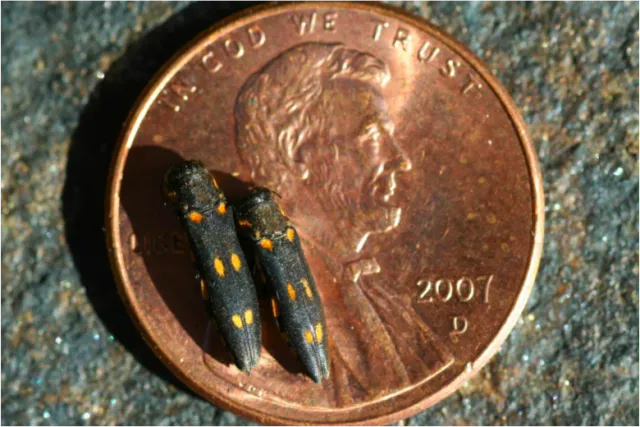
In August of 2024, a coast live oak along Box Canyon Road on the eastern edge of Ventura County was found to be infested with the goldspotted oak borer and the infected tree was removed and disposed of the limit the spread of the beetle detailed Cal Fire.
Despite those efforts, a second oak that was already dead from the infestation was found in Santa Susana in April of 2025 and several additional dead or dying coast live oaks showing the signs of a goldspotted oak borer infestation were discovered along Las Llajas Canyon Road the following month noted Cal Fire.

According to Cal Fire, large oaks can die within a few years after an initial infestation and are highly vulnerable once goldspotted oak borers are established in the region.
The most common way for the beetles to make it into new regions is usually through infested fire wood.

Goldspotted oak borer eggs have a width of 1 mm and are oval shaped with a flat bottom. When they are first laid, they are white (shown in image A below) and turn a light brown within a few days (shown in image B below).
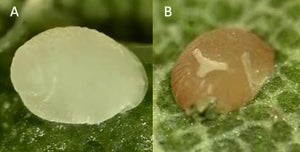
The eggs are often tough to spot in the wild because of their size and are usually laid inside bark crevices.
The next life-stage of the goldspotted oak borer is as mature larvae that are about 18 mm long and 3 mm wide. The legless, white larvae have a large head with hardened mandibles used to perform its namesake action, bore into trees.
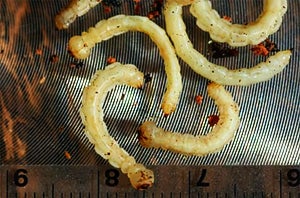
Larvae burrow into a tree and feed beneath the bark where the hardened external layer meets softer, living parts of the tree. Feeding larvae kill patches of this hidden layer which eventually causes the infected tree's demise.
Adult goldspotted oak borers chew out of the bark and then spend their lives feeding on oaks foliage.
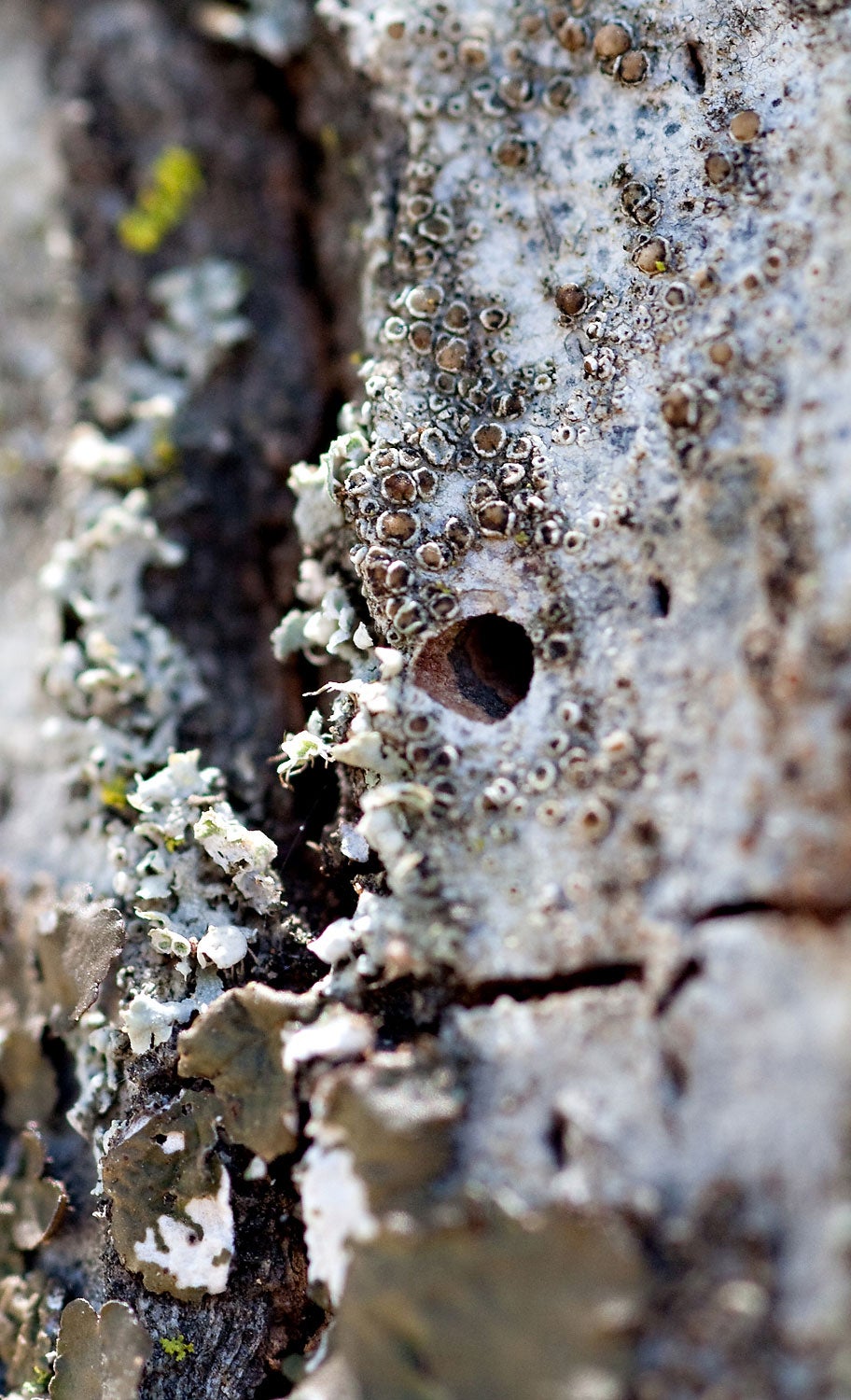
If you believe you have spotted goldspotted oak borer, you can report your sighting here and you can sign up for a University of California mailing list about the spreading species here.

In California, observations show the beetles complete a lifecycle each year with mature larvae usually seen in trees in late May to as late as October shared the University of California Riverside.
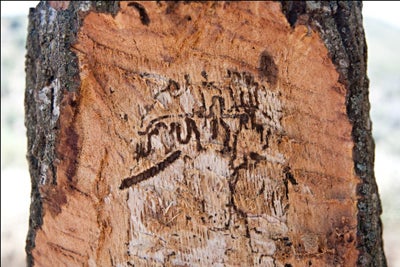
With Ventura County now on the front lines of the infestation, members of the community are encouraged to participate in a coordinated response managed by Cal Fire, University of California Agriculture and Natural Resources, the Ventura County Fire Department, and the Ventura County Department of Agriculture Weights and Measures.
On Feb. 13, interested participants can attend an informational session for the Goldspotted Oak Borer Blitz. For more information about the information session, visit here.
