Federal regulator opens emergency permit to restart oil production locally to public comment
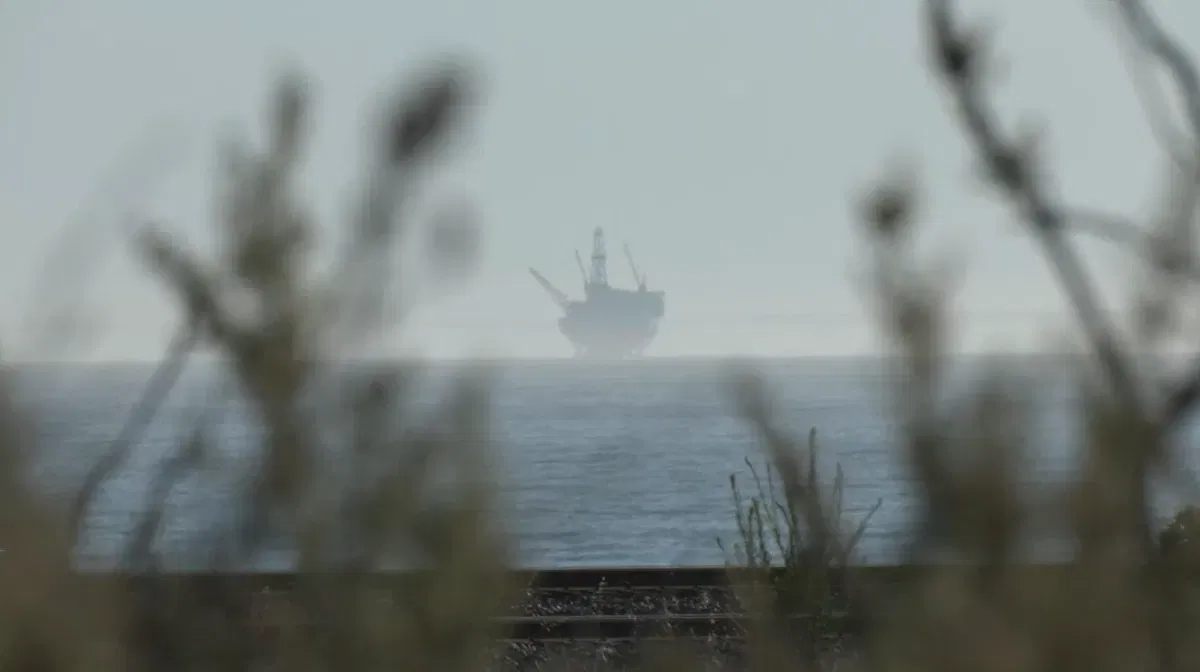

WASHINGTON D.C. (KEYT) – Federal regulators are seeking public comment regarding plans to waive some safety requirements before restarting the use of dormant oil pipelines locally.
Monday's announcement of a 30-day public comment period begins a legally required review process before a special permit can be issued and oil production through the shuttered pipelines can restart.
"PHMSA [the U.S. Department of Transportation's Pipeline and Hazardous Materials Safety Administration] has reviewed the draft conditions and preliminarily determined that the issuance of the special permit would not be inconsistent with pipeline safety," shared federal regulators when announcing the public comment period Monday. "PHMSA invites interested persons to review and submit comments in the docket on the special permit request, draft proposed special permit, and DEA [draft environmental assessment]. Please submit comments on any potential safety, environmental, and other relevant considerations implicated by the special permit request."
Public comments for Docket No. PHMSA-2026-0464 can be submitted in the following ways
- Online here
- Faxed to 1-202-493-2251
- Mailed to Docket Management System: U.S. Department of Transportation's Docket Operations, M-30, West Building Ground Floor, Room W12-140, 1200 New Jersey Avenue, SE, Washington D.C. 20590
- Hand delivered to the address above between 9 a.m. and 5 p.m., Monday through Friday, except federal holidays
"These old oil pipelines are dangerous enough without the Trump administration overstepping its authority to help Sable cut corners and skip safety requirements," argued Julie Teel Simmonds, Senior Counsel at the Center for Biological Diversity. "This project is a serious risk to California’s marine life and coastal communities. Waiving these pipeline safety standards is a gamble that no one should be taking."
In December of last year, Sable Offshore informed investors that it had determined that pipelines connecting an onshore oil processing plant on the Gaviota Coast to Pentland Station in Kern County are technically interstate pipelines under the Pipeline Safety Act and requested that federal regulators take over its restart plans involving the pipelines.

The Pipeline and Hazardous Materials Safety Administration argued that the restart plans were subject to emergency permitting based on a national energy emergency declared by President Trump last year which could bypass normal regulatory steps.
"Sable stated that expedited review of its application was warranted in light of the national energy emergency declared by the President under the National Emergencies Act in Executive Order 14156," announced the Department of Transportation when issuing the emergency permits to Sable Offshore. "This emergency special permit allows Sable to operate Lines CA-324 and CA-325 without being subject to the requirement to evaluate and remediate corrosion of or along a longitudinal seam weld within 180 days."
According to an 8-K filing with the U.S. Securities and Exchange Commission, the U.S. Department of Transportation Pipeline and Hazardous Materials Safety Administration informed the Houston-based energy company that it had approved its restart plans for Line CA-324 and Line CA-325 on Dec. 22, 2025.

Line CA-324, formerly known as Line 901, has remained dormant since it ruptured, causing the 2015 Refugio Oil Spill which impacted 150 miles of California coastline and destroyed thousands of acres of shoreline habitats.
The approval came after the federal agency removed the California Office of State Fire Marshal from the restart process.
"Ever since a catastrophic oil spill at Refugio Beach in 2015 led to a court-ordered consent decree, CAL FIRE - Office of the State Fire Marshal has been responsible for overseeing the repair of the lines that caused the spill, which are now operated by Sable Offshore Corp in Santa Barbara County," shared Daniel Villaseñor with the California Natural Resources Agency.
Days after the approval, environmental advocacy groups filed an emergency lawsuit seeking to block the approval, but the federal court declined to issue a stay on federal approval of restart plans.
Despite the decision to not immediately halt the restart process, the court did grant that the lawsuit would receive expedited processing and, during court proceedings in early January, legal representatives of Sable Offshore admitted that oil production had not restarted at both offshore and onshore pipelines, opening the onshore pipelines up to a recently passed state law.
The new state law, SB 237, would require Sable Offshore to request a coastal development permit among other steps from the California Coastal Commission to conduct any, "Repair, reactivation, and maintenance of an oil and gas facility, including an oil pipeline, that has been idled, inactive, or out of service for five years or more".
Those specifications only apply to idle onshore pipelines in Santa Barbara and Kern counties.
"Rushing to restart this failed pipeline without following basic federal safety laws and without even making the necessary repairs poses an immediate threat to lives, property, and the environment across a large part of our state," explained the Environmental Defense Center's Chief Counsel Linda Krop, one of the petitioners in the Dec. 24 lawsuit. "We can’t allow the Trump administration and Sable to undermine California law and gamble with the safety of everyone living along the pipeline route."
Despite those attempts to supplant state regulators with federal ones for its onshore pipeline restart plans, Sable Offshore has also been pursuing an alternative plan to ship crude oil from offshore platforms using offshore tendering vessels.

"Continued delays related to the Santa Ynez Pipeline System have prompted Sable to evaluate and pursue the OS&T [Offshore Storage and Treating] Strategy," stated Sable Offshore in an 8K filing with the U.S. Securities and Exchange Commission. "In connection with implementation of the OS&T Strategy, the Company expects to opportunistically acquire an existing OS&T in the first quarter of 2026, with delivery of the vessel to SYU expected in the third quarter of 2026."
On Oct. 9 of last year, Sable submitted an updated Development and Production Plan to the U.S. Bureau of Ocean Energy Management, a key regulatory hurdle to begin shipping crude oil from offshore oil platforms in the Pacific Outer Continental Shelf Area.
Sable's interest in getting oil to market through either method isn't just tied to a return on investment for shareholders, Sable's purchase of the entire oil-generating infrastructure from ExxonMobil back in February of 2024, has a crucial deadline.
According to court documents, Sable secured a $622,000,000 loan from Exxon to fund the purchase of the Santa Ynez Unit which is set to expire and ownership revert back to the oil giant unless oil from the Santa Ynez Unit enters the market.
On Nov. 3, 2025, Sable was able to extend that maturation deadline to March 31, 2027, the extension also included an increased interest rate from ten percent to 15 percent per annum, and requires the Houston-based energy company to retain no less than $25 million in unrestricted cash each month.
During the flurry of approvals and litigation in late December, the California Coastal Commission noted that it had not waived its right under the Coastal Zone Management Act to review the federal regulator's decision to reclassify pipelines and assume authority over restart plans.
The state regulator added that the federal government's expedited approval is also subject to review of compliance under Subpart E of the Coastal Zone Management Act, through the National Environmental Policy Act, as well as through Appendix D of the Consent Decree in U.S. et al v. Plains All American Pipeline, LP and Plains Pipeline, a court decision agreed to after the 2015 Refugio Oil Spill.
The Coastal Commission's insistence on a 30-day review period joins other state agencies noting that the restart process still has outstanding steps here in California.
According to California State Parks, an easement for Gaviota State Park is necessary to restart production and has not been granted for CA-325 which runs through the state agency's jurisdiction.
In fact, of the 22 detected pipeline anomalies that required repair work back in May of 2025, 18 were within the borders of Gaviota State Park, shown as the blue circles on the left side of the image below along Line 325a which is the green line.

Public claims made back in May by Sable Offshore and the Trump Administration about already restarting oil production may have violated leases issued by the California State Lands Commission.
"This is a significant achievement for the Interior Department and aligns with the Administration's Energy Dominance initiative, as it successfully resumed production in just five months," stated the U.S. Department of Interior in July of 2025. "With production now underway at Sable's Platform Harmony, the Interior's Bureau of Safety and Environmental Enforcement (BSEE) continues to work with Sable to bring additional production online."
The energy company walked back those restart claims to investors explaining in a disclaimer that, "The Santa Ynez Unit assets discussed in this [May 19, 2025] press release have not sold commercial quantities of hydrocarbons since such Santa Ynez Unit assets were shut in during June of 2015 when the only onshore pipeline transporting hydrocarbons produced from such Santa Ynez Unit assets to market ceased transportation. There can be no assurance that the necessary approvals will be obtained that would allow the onshore pipeline to recommence transportation and allow the Santa Ynez Unit assets to recommence sales."
In addition to that financial deadline, the latest update about the need for a costal development permit, and the easement from State Parks, Sable is also facing civil charges brought by the California Attorney General and criminal charges brought by the Santa Barbara County District Attorney's Office regarding its pipeline repair work.
"The allegations from the Santa Barbara County District Attorney’s Office are inflammatory and extremely misleading," stated a spokesperson on behalf of Sable Offshore. "All of the repairs and excavations were supervised by a certified independent biologist and cultural resource professional and Office of State Fire Marshal personnel. No wildlife were adversely affected. All of these previously disturbed areas have been or are being remediated in accordance with state and local erosion control mitigation measures."
Further complicating Sable's restart plans was the decision by the County of Santa Barbara's Board of Supervisors to not transfer permits the day before the Department of Transportation publicly shared that it had taken over oversight of the restart process from state safety regulators.

"Sable’s admission in court [on Jan. 7 of this year] that it has yet to restart its defective oil pipeline is a big deal," explained Chief Counsel for the Environmental Defense Center Linda Krop Wednesday. "Restarting this pipeline system without making critical repairs that the state has said are necessary, and with no environmental review or public vetting at any level of government, risks another major disaster in California."
Monday's public comment period announcement concluded that, "Before issuing a decision on the special permit request [from Sable Offshore], PHMSA will evaluate all comments received on or before the comment closing date. PHMSA will consider each relevant comment it receives in making its decision to grant or deny this special permit request."
Your News Channel has reached out to Sable Offshore and the U.S. Department of Transportation for comment and more information and their respective responses will be added to this article when they are received.
