Federal immigration applicants now subject to expanded review of ‘anti-Americanism’
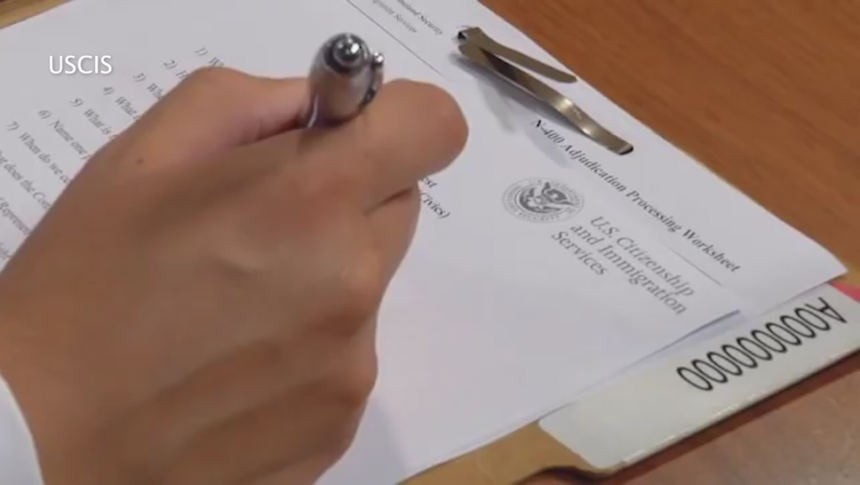

WASHINGTON D.C. – On Tuesday, federal immigration services updated the discretionary factors used to decide immigration requests which will now include an expanded review of an applicant's potential association with groups, ideologies, or beliefs considered anti-American or antisemitic.
According to a press release from U.S. Citizenship and Immigration Services (USCIS), the expanded vetting will include a review of anti-American or antisemitic activity, including social media posts, subject to the discretion of investigators and will be considered, "an overwhelmingly negative factor" if discovered in connection with a pending immigration application.
Tuesday's additions to the USCIS Policy Manual include circumstances were an applicant for benefits has, "endorsed, promoted, supported, or otherwise espoused the views" of any organization deemed anti-American or antisemitic detailed the USCIS.
The new policy guidance took effect immediately Tuesday, applies to all pending or filed requests, and supersedes any related prior guidance stated the USCIS.
"America’s benefits should not be given to those who despise the country and promote anti-American ideologies," said USCIS spokesman Matthew Tragesser. "U.S. Citizenship and Immigration Services is committed to implementing policies and procedures that root out anti-Americanism and supporting the enforcement of rigorous screening and vetting measures to the fullest extent possible."
Certain immigration benefit requests, such as an adjustment of status, have been subject to the discretionary analysis of immigration authorities for decades.
Factors including an applicant's conduct, character, family ties, immigration history, and humanitarian concerns have been used when coming to a decision over a pending application and were subject to the discretion of investigating authorities.
Previous prohibitions within the naturalization process, detailed in Title 8 of the U.S. Code Section 1424, included forms of opposition to all organized government, Communism-related organizations and literature, groups espousing the violent overthrow of the government of the United States, or other totalitarian political groups.
The changes to discretionary analysis for immigration applicants comes as the Trump Administration has issued multiple Executive Orders, created a federal task force concerning perceived anti-semitism on college campuses, suspended hundreds of millions of dollars for multiple universities, and the revocation of student visas for hundreds of international students over claims of anti-semitism and insufficient loyalty to the government of the United States.
Some high-profile cases include Mahmoud Khalil at Columbia University, a legal permanent resident who participated in pro-Palestinian protests, and Rümeysa Öztürk at Tufts University, a Turkish citizen who co-wrote an op-ed in the Tufts Daily asking her university to divest from companies with ties to Israel.
"I suggested to the government that they produce any additional information which would suggest that she posed a substantial risk," noted U.S. District Judge William K. Sessions during a bail hearing for Öztürk in May of this year. "And that was three weeks ago, and there has been no evidence introduced by the government other than the op-ed. That literally is the case. There is no evidence here."
Following her arrest in Boston on March 25 by federal agents, the Trump Administration accused the doctoral student of engaging in, "activities in support of Hamas".
U.S. District Judge Sessions ordered the immediate release of Öztürk from the South Louisiana ICE Processing Center were she had been detained for six weeks explaining, "her continued detention potentially chills the speech of the millions and millions of individuals in this country who are not citizens."
Öztürk still faces potential deportation as she seeks injunctive relief through the court system.
