Research out of UC Santa Barbara could improve mosquito repellants of the future


SANTA BARBARA, Calif. (KEYT) – Researchers at UC Santa Barbara have identified a new taste receptor in a dangerous species of mosquitos that could lead to improvements in future repellants.
The UC Santa Barbara research team, led by Professor Craig Montell, identified the 'Painless1' taste receptor that detects fatty acids in human skin.
Those fatty acids are a natural part of a healthy epidermis, providing elasticity and necessary moisture in our skin. We get them from what we eat and drink.
Mosquitos use their senses, including taste, before choosing a victim and the molecular mechanisms that inform that taste-based, or gustatory, selection in mosquitos is what the UCSB research team discovered.
If a mosquito's neurons detect something that doesn't taste good, then they are less likely to make a meal of us.
"We discovered that the taste of fatty acids on skin causes a stop-feeding signal, which depends on a type of receptor specific to insects and other arthropods," explained Dr. Montell. "So chemicals that turn on this channel may prevent biting without causing harm to people."
Dr. Montell and the research team's findings were published in the Proceedings of the National Academy of Sciences under the title of, "Gustatory avoidance of fatty acids by Aedes aegypti depends on an arthropod-specific TRP channel".
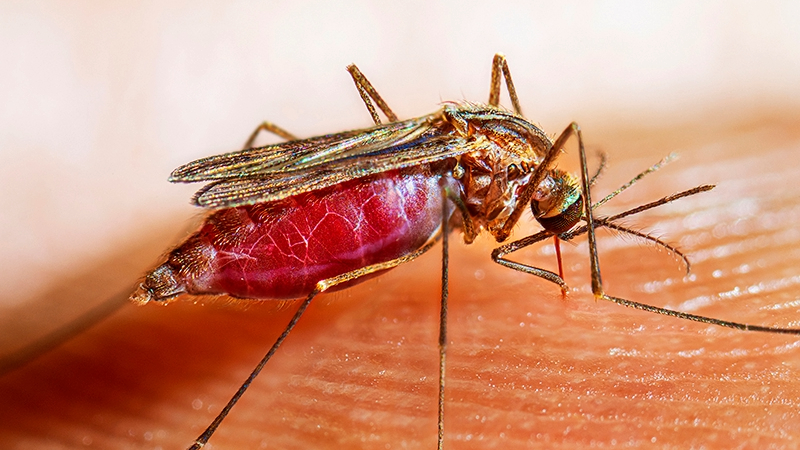
As the title indicates, the focus of the study was on one particular mosquito species, Aedes aegypti -also known as the yellow fever mosquito- which are known carriers of dengue, chikungunya, and the Zika virus.

While many virus-carrying species in the Aedes genus of mosquitos have been transmitting diseases to primates in Africa for thousands of years, Aedes aegypti, have spread around the world alongside one particular primate, Homo sapiens and, notably, are the primary vector for major mosquito-based epidemics outside of Africa.
The invasive species can be found in parts of California as the image below from the California Department of Public Health shows.

The involved receptor, Painless1, is classified within transient receptor potential (TRP) channels that play a prominent role in sensory biology.
Dr. Montell first identified TRP channels in fruit flies back in 1989.
The Painless1 receptor was also found in Aedes aegypti's taste organs on its legs and proboscis and when researchers knocked out the gene that codes for Painless1 using new gene-editing technology known as CRISPR-Cas9, they found that the receptor played a key role in mosquito aversion to fatty acids in our skin.
The authors noted that the smell, or olfactory sense, of fatty acids actually attract mosquitos, but become a repellant once the insect begins to use its sense of taste.
"I was a little surprised that the same kinds of chemicals that are olfactory attractants also stop the mosquito from feeding," acknowledged Dr. Montell about the finding. "[B]ecause humans don't have that particular TRP channel [identified in the research] you don’t have to worry about such a chemical doing anything bad to us."
The finding could have a big impact on future insect repellants.
One of the most widely used ingredients in current insect repellants is DEET, which disrupts an insects ability to use their sense of smell to locate humans.
Since its development by the U.S. Army in 1946, the ingredient can now be found in over one hundred commercially available insect repellants approved by the Environmental Protection Agency.
While the federal government has approved the use of DEET, it still can cause irritation and headaches and only lasts a few hours.
Before those future repellants hit the market, using EPA-approved mosquito repellants with DEET on your clothes and exposed skin, avoiding standing water where mosquitos breed, and using mosquito repellant after returning from areas where notable mosquito-borne diseases are present are the best methods to protect yourself and others.
More information on how to protect yourself can be found here.
