The changing cost of the grocery cart: The impact of inflation on groceries

Hryshchyshen Serhii // Shutterstock
Inflation dominates many economic discussions, not least because it shapes the spending power of consumers and big businesses alike, meaning everyone is affected.
Recent years have seen significant inflation spikes, which have cooled as the underlying issues behind them abated. Thus, retailers and their customers expect to be able to claw back some ground in terms of rising prices, or at least enjoy a general easing off of major month-on-month increases.
Manufacturers of consumer packaged goods (CPGs) are not so lucky. Inflation’s impact on raw materials and supply chains is persistently volatile, making it difficult for them to identify the savings and efficiencies needed to bring prices to heel.
On top of this, retailers and consumers are less willing to stomach the pricing of a plethora of goods. Manufacturers can’t reliably raise prices to offset their cost concerns, which in turn puts margins at risk of significant shrinkage.
In the face of inflationary pressures, brands can use the next 18 months to pivot away from the blunt instrument of price hikes. Instead, a combination of Price Pack Architecture (PPA) and supply chain agility represents a more reliable strategy for long-term viability.
With that in mind, here’s a look at what CPG brands can do to deal with inflationary pressures, protecting their profits while keeping retail partners and consumers on-side.
The ‘Trade-Down’ Opportunity
To avoid relying on speculation and individual anecdotes, the team at The Barcode Group, a retail agency, has collated data on the impact of inflation on groceries to understand where things stand, how we got here, and what the future might hold.
The best source for up-to-date information on how the cost of food purchased for domestic consumption is changing is the USDA’s data. The agency compares the Consumer Price Index (CPI), a measure of all items considered when calculating overall inflation on a month-on-month and year-on-year basis, with food-at-home price changes over the same periods.
In the most recent Food Price Outlook, the CPI rose by 0.3% between July and August 2025. The YoY increase of 2.9% reflects economy-wide price increases relative to the same month in 2024.
What’s significant about this data is that grocery prices actually increased at a rate slightly below inflation, rising 2.7% YoY. In contrast, food-away-from-home prices shot up by 3.9%, reflecting that restaurants and other food service providers have raised prices beyond the cost of raw ingredients. This ties into the fact that they are exposed to inflationary pressures across different areas, including rising energy costs, rents, and wages.
With dining out becoming prohibitively expensive, CPG brands have an opportunity to reframe cooking at home as an appealing alternative. Since more consumers are “trading down” by skipping eating out, aggressively marketing products that promise restaurant-quality meals at home is a savvy move.
Brands can also work with retailers to capitalize on this push via cross-merchandising. Leading consumers to the correct product combinations that bring the restaurant experience home should be clear and conspicuous on store shelves. Something as simple as placing premium pasta sauce next to fresh pasta in the chiller cabinets, or pairing high-grade cuts of meat with accompanying sauces, can create this connection.
Mitigating Supply Chain Shocks
Supply chain disruption can occur for various reasons, and inflation is just one of the factors brands must account for and mitigate.
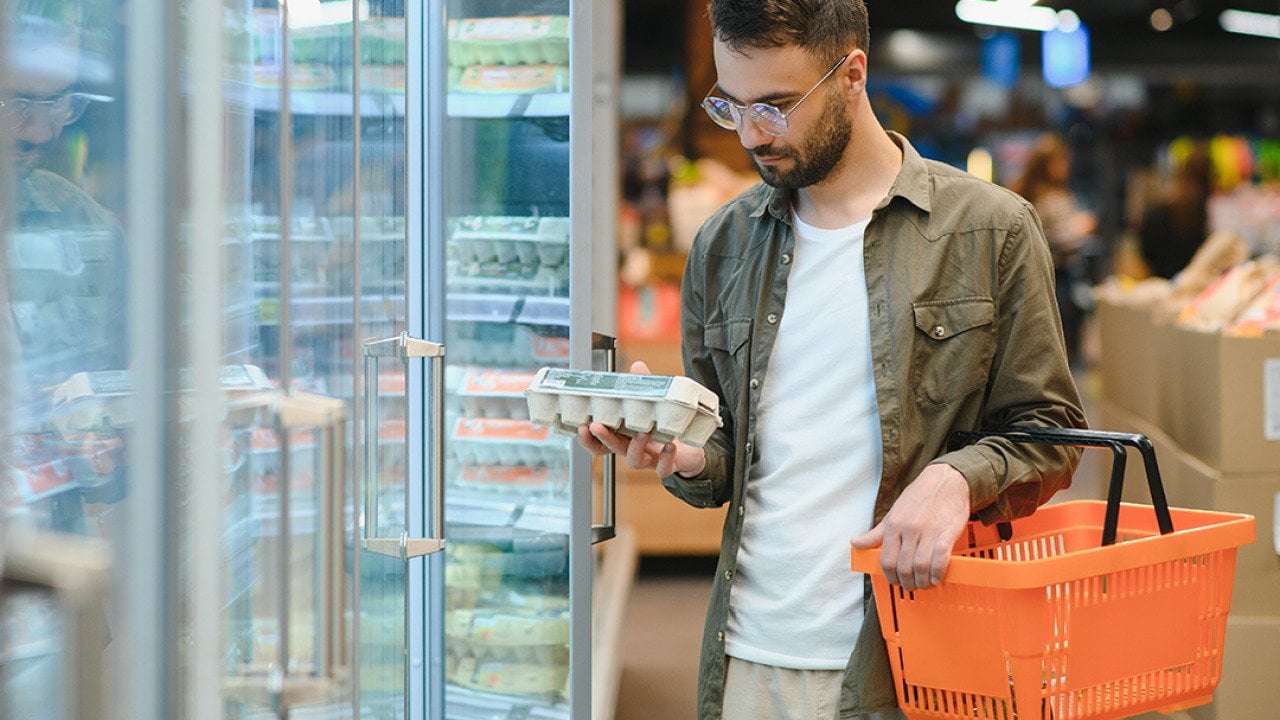
Eggs provide a perfect case study of how supply chain shocks can emerge unexpectedly and alter pricing in ways entirely detached from economic realities.
Particularly since 2023, egg prices have been on a rollercoaster ride. They peaked initially at $4.82 per dozen in January of that year, before falling to $2.08 by May. They hit a new, historic high of $6.27 in March of 2025. This was primarily caused by supply chain issues stemming from a bird flu outbreak, which saw prices jump by 59% YoY.
Such violent swings in either direction are an existential crisis for certain manufacturers. Preparing for them requires a multifaceted approach.
For commodities like eggs, a two-pronged strategy works best. Diversifying a supplier base and having alternative options as a result leaves manufacturers less exposed to unpredictable price movements. At the same time, having alternative formulations for products means that lynchpin ingredients can be swapped out when they become unjustifiably expensive.
The upshot for CPG brands that have planned for supply chain shocks is that they can keep their products on store shelves at acceptable prices during moments when competitors might be held back by stock-outs or forced to implement price increases that drive consumers away.
Managing Import Volatility
Commodities not produced domestically bring their own supply chain uncertainties and challenges. Coffee illustrates this; it’s one of the most widely purchased products nationally, yet it is primarily imported from overseas. Inflation’s impact and other catalysts for sudden price changes are thus harder to predict, yet essential to plan for.
Coffee prices have followed a similar, though more exaggerated, pattern to eggs. FRED data shows spikes in the mid-1980s and 1990s, with associated drops in the cost of a pound of ground-roast coffee in the average U.S. city. A peak of $4.66 in August 1997 wasn’t exceeded until April 2011, when prices crept above $5 per pound for the first time. Then a downward trend began, and from the mid-2010s until 2020, prices sat at just over $4 per pound.
Once again, pandemic-led inflation kicked in, sending coffee prices higher in a much more consistent way than many other staples. In December 2022, per-pound costs hit $6.46. There was a slight reduction following this, before they accelerated again in mid-2024. By September of 2025, $9.13 is the average price consumers would pay for an average pound of coffee.
Coffee’s 40% annual spike seen between 2024 and 2025 is down to tariffs, not inflation. However, prices plummeted after tariffs imposed on imports from Brazil were recently eliminated. This is an example of how certain grocery items, primarily those imported from other parts of the world, can experience price changes independent of domestic inflation trends.
Brands might assume their only option is to raise prices when factors beyond the U.S. economy affect imports, such as coffee. However, this is likely to scare consumers away, even for a commodity that’s so universally popular. One solution lies in Price Pack Architecture: redefining other aspects of a product while maintaining the established price point.
So, for coffee, rather than raising the price per pack, brands could instead reduce the size of a standard pack so that the original price can be maintained until the import issues are resolved. Alternatively, the same pack size could be preserved, but switching to a value blend made with more affordable, accessible coffee might be appropriate.
Individual brands must choose a path according to the needs and expectations of the demographics they’re targeting. However, the point holds for all CPG manufacturers; PPA gives brands a way around import volatility without hurting profit margins.
The Private Label Threat
It’s apparent that inflation’s influence on prices is likely to persist, with some product categories more susceptible to this specific price pressure than others. Combined with other external factors, ranging from tariffs on imports to non-economic issues like avian flu, CPG brands cannot afford to ignore the likelihood of consumers looking to save money by moving to “private label” brands, meaning those sold by stores.
Competing directly on price with private label brands is not typically an option. This is where national brands must invest in innovation and brand equity to justify the price premium they’re asking over generic equivalents.
What this process looks like will differ for each brand. Some may find PPA effective, while others may rely on behind-the-scenes changes, whether that’s in manufacturing technologies and techniques or in supply chain negotiations and supplier diversification. ompanies that rely solely on raising prices will be more vulnerable to the private-label threat driven by inflation.
This story was produced by The Barcode Group and reviewed and distributed by Stacker.

