Got the flu? Here’s how long you’re contagious


Cira123 // Shutterstoc
When the flu strikes, one of the biggest concerns is how long you might be contagious. Knowing this can help protect your family, friends, and coworkers from catching the virus. This guide from Doctronic.ai breaks down exactly how long you can spread the flu and what you can do to minimize the risk.
It is crucial to recognize that the contagious period can vary significantly among individuals, influenced by factors such as age, overall health, and the specific illness in question. For instance, while adults may follow a more standardized timeline, children often exhibit different patterns of contagion, sometimes remaining infectious even after their symptoms have resolved. This variability underscores the importance of vigilance and awareness, especially in communal settings like schools and daycare centers, where the risk of spreading infections can be heightened.
Maintaining good hygiene practices is not just about personal health; it is a collective responsibility that can significantly impact public health. Simple actions such as frequent handwashing, using hand sanitizers, and wearing masks in crowded places can create a protective barrier against the spread of infections. Educating those around you about the importance of these practices can foster a culture of health awareness, ultimately leading to healthier communities. By prioritizing these measures, we can work together to minimize the impact of contagious diseases and protect the most vulnerable among us.
Key Takeaways
- You are typically contagious one day before symptoms start and up to seven days after becoming sick.
- Children and people with weakened immune systems may be contagious for longer periods.
- Early diagnosis and care, including telehealth visits, can help manage symptoms and reduce the spread.
- Good hygiene and isolation during contagious periods are essential to prevent transmission.
- Understanding the contagious timeline helps you make informed decisions about when to return to work or school.
Understanding Flu Contagiousness
When Does Flu Contagiousness Begin?
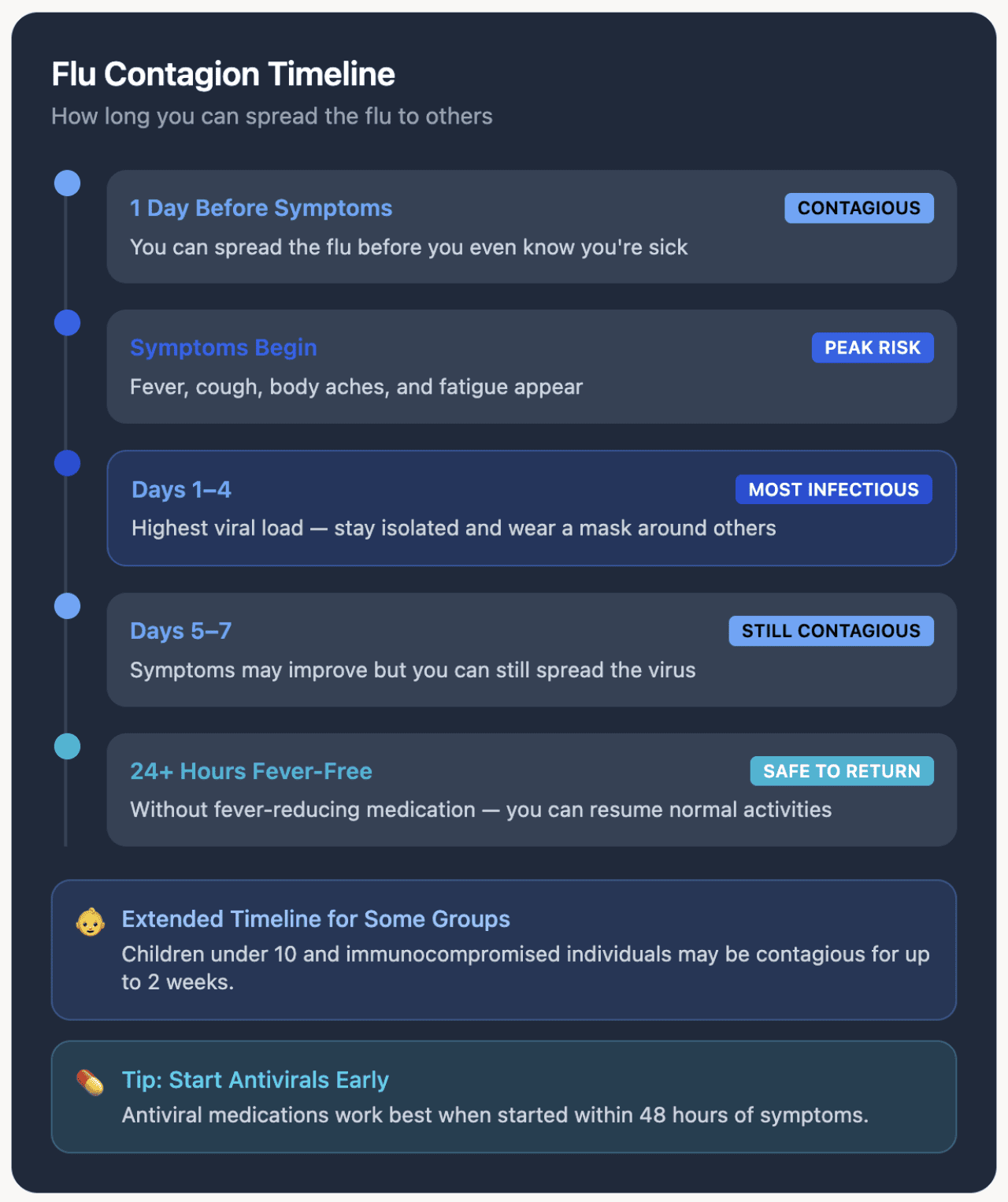
You can start spreading the flu virus to others about one day before you even notice symptoms. This means you might feel perfectly fine but still be contagious. This early contagious period is one reason flu spreads so quickly in communities and workplaces. In crowded environments, such as schools and offices, the potential for transmission increases significantly, as people often share spaces and interact closely. The flu virus can survive on surfaces for several hours, further facilitating its spread. Regular handwashing and sanitizing common areas can help mitigate this risk.
How Long Are You Contagious After Symptoms Appear?
Once symptoms like fever, cough, and body aches begin, you remain contagious for about five to seven days. The most infectious period is usually the first three to four days after symptoms start. During this time, the virus is most active in your respiratory secretions, such as saliva and mucus. It’s essential to be mindful of this contagious window, especially when considering social interactions or returning to work. Wearing a mask and practicing respiratory hygiene, such as covering your mouth when coughing or sneezing, can significantly reduce the risk of spreading the virus to others during this peak period.
Extended Contagious Periods for Certain Groups
Children, especially those under 10, and individuals with weakened immune systems can remain contagious for longer than seven days. In some cases, they may spread the virus for up to two weeks. This makes it especially important for caregivers and families to take extra precautions. Young children often have less developed immune systems, which can prolong their ability to transmit the virus. Similarly, individuals with chronic health conditions or those undergoing treatments that compromise their immune response may also shed the virus for extended periods. Awareness of these factors can help in planning effective preventive measures, such as keeping sick children at home and ensuring that those with compromised immunity avoid close contact with infected individuals.
Doctronic
How to Protect Others While You’re Contagious
Practice Good Hygiene
- Wash your hands frequently with soap and water for at least 20 seconds.
- Cover your mouth and nose with a tissue or your elbow when coughing or sneezing.
- Dispose of tissues immediately and wash your hands afterward.
Isolate Yourself When Possible
Staying home and avoiding close contact with others during your contagious period is the best way to prevent spreading the flu. If you live with others, try to stay in a separate room and use a separate bathroom if available.
Wear a Mask Around Others
If you must be around people, wearing a mask can reduce the chance of passing the virus through respiratory droplets. This is especially important in crowded or enclosed spaces.
When to Seek Medical Advice
Recognize Warning Signs
Most flu cases improve with rest and fluids, but some symptoms require prompt medical attention. Seek care if you experience difficulty breathing, chest pain, persistent high fever, confusion, or severe weakness.
Using Telehealth for Flu Care
Telehealth services offer quick, affordable access to medical advice and treatment from the comfort of your home. This can be a convenient way to get a diagnosis, treatment plan, or second opinion without risking exposure to others.
Benefits of Early Diagnosis
Starting antiviral medications within 48 hours of symptom onset can reduce the severity and duration of the flu. Early diagnosis through telehealth can help you get these treatments promptly, improving recovery and reducing contagiousness.
Returning to Work or School Safely
When Is It Safe to Resume Normal Activities?
Generally, you should stay home for at least 24 hours after your fever is gone without using fever-reducing medications. This helps ensure you’re less contagious. Since the flu can still spread up to seven days after symptoms start, consider staying home longer if possible, especially if you still have a cough or feel weak.
Communicating with Employers and Schools
Inform your workplace or school about your illness and follow their guidelines for returning. Many institutions recommend staying home until you are fever-free and feeling well enough to participate fully.
Preventing Future Flu Spread
- Get vaccinated annually to reduce the risk of catching and spreading the flu.
- Maintain good hygiene habits year-round.
- Seek medical advice when flu symptoms appear.
Frequently Asked Questions
How soon after exposure can I spread the flu?
You can be contagious about one day before symptoms appear, even if you feel fine.
Can I spread the flu if I don’t have symptoms?
Yes, people can spread the flu before symptoms start and sometimes even if they never develop symptoms.
How long should I stay home if I have the flu?
Stay home at least 24 hours after your fever ends without medication, but ideally for up to seven days after symptoms start.
Does antiviral medication affect how long I’m contagious?
Antiviral drugs can reduce the duration and severity of contagiousness if started early, usually within 48 hours of symptom onset.
Can telehealth help with flu diagnosis and treatment?
Yes, telehealth services provide quick, affordable access to flu diagnosis and treatment recommendations from licensed doctors.
This story was produced by Doctronic and reviewed and distributed by Stacker.

