NASA’s TRACERS mission scheduled to launch from Vandenberg SFB Wednesday after scrub

VANDENBERG SPACE FORCE BASE, Calif. – The TRACERS mission and three other NASA missions are scheduled to be launched from Vandenberg SFB aboard a Falcon 9 booster with a 57-minute launch window beginning at 11:13 a.m. Wednesday, July 23 after the launch was scrubbed Tuesday.
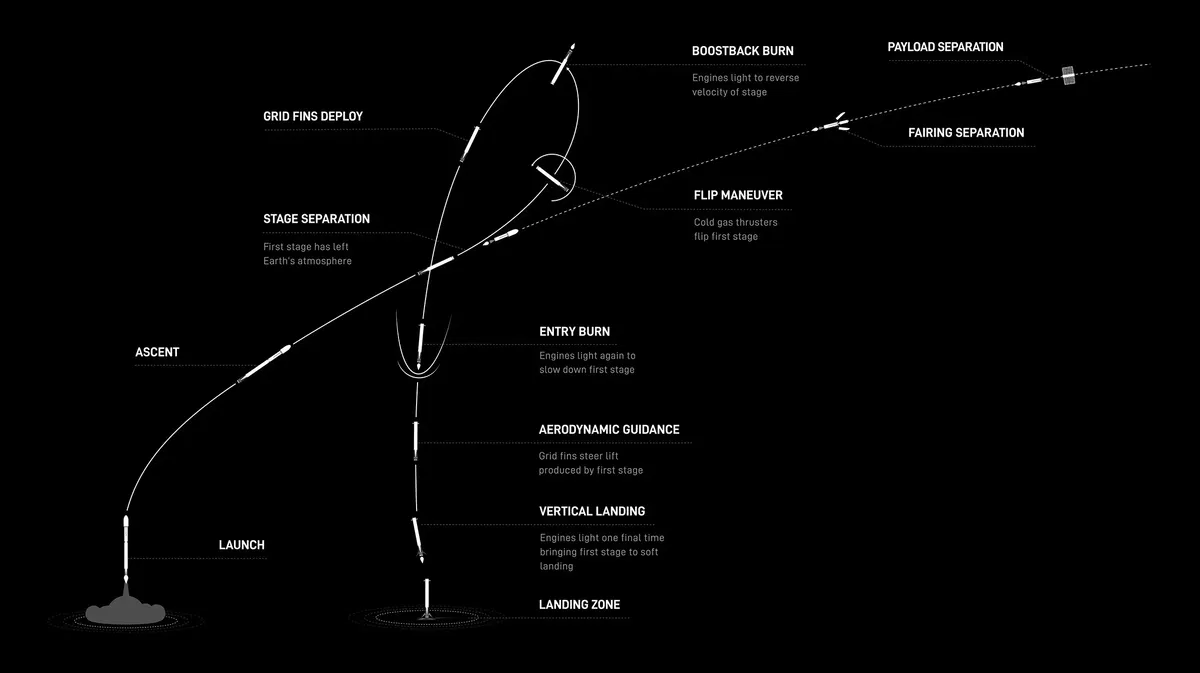
The Falcon 9 assigned to this mission will return about eight minutes after liftoff to land at Vandenberg Space Force Base's Landing Zone 4 and there is a possibility during the launch sequence that people in the region may hear one or more sonic booms associated with the launch shared Vandenberg Space Force Base.
A depiction of that launch sequence is show below courtesy of SpaceX.
A live webcast of the launch will begin about 15 minutes before liftoff that you can watch here.
This will be the 16th flight for the booster assigned to this mission which previously launched the following missions: Crew-7, CRS-29, PACE, Transporter-10, EarthCare, NROL-186, Transporter-13, and eight Starlink missions.
The TRACERS (Tandem Reconnection and Cusp Electrodynamics Reconnaissance Satellites) spacecraft will join three other projects on the launch from Vandenberg SFB's Space Launch Complex 4 East shared the National Aeronautics and Space Administration (NASA).
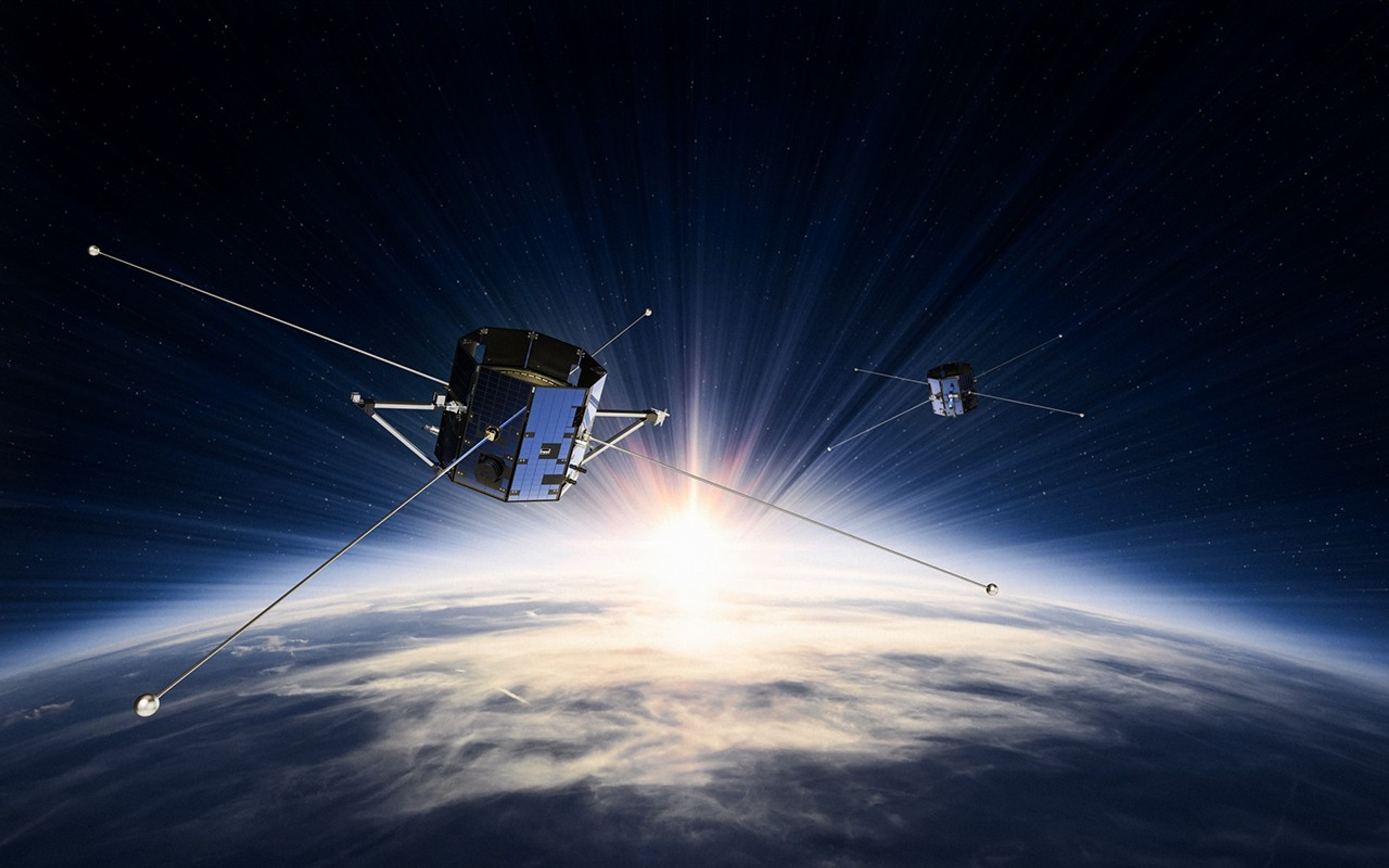
The mission will use tandem spacecraft to study how the stream of ionized particles continuously coming from the sun, known as solar wind, interact with the our planet's surrounding magnetic field or magnetosphere.
A depiction of how solar winds interact with the Earth's magnetosphere is shown below courtesy of NASA/CILab/Josh Masters.
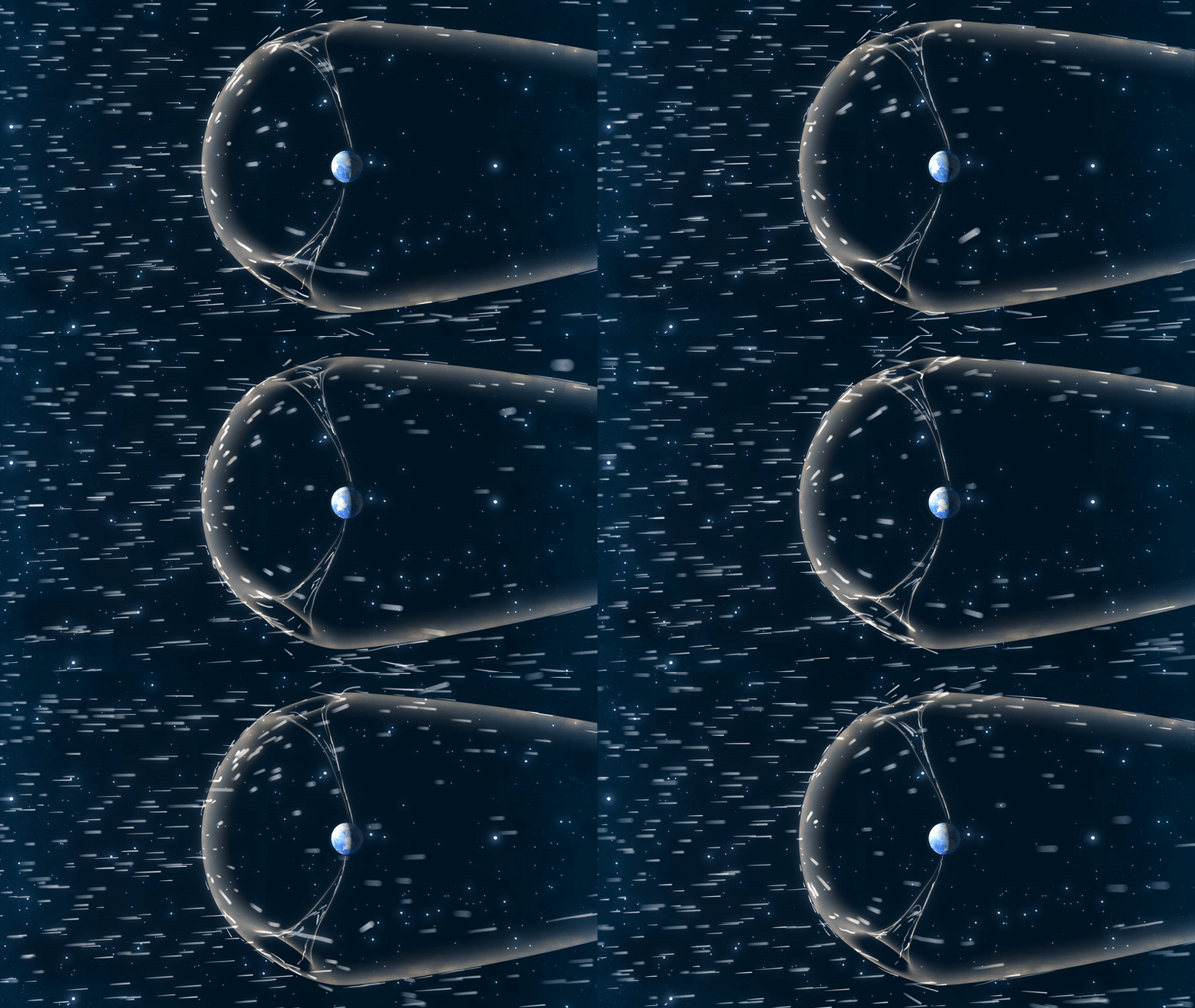
According to NASA, the TRACERS spacecraft will fly through the polar cusp where the planet's magnetosphere dips toward the surface of Earth.
The TRACERS mission will build on existing missions studying solar wind interactions in Earth's atmosphere including NASA's PUNCH and EZIE missions already in low-Earth orbit.
Also part of the NASA-funded payloads scheduled to launch Tuesday are three additional missions from the federal space agency that are detailed below.
The Athena EPIC (Economical Payload Integration Cost) smallsat is designed to put remote-sensing instruments into a faster orbit and with reduced costs.

The Polylingual Experimental Terminal (PExT), a joint NASA and Johns Hopkins Applied Physics Laboratory project, is intended to demonstrate a wideband terminal technology that future missions could use to roam between communications networks in space -comparable to how cell phones roam between communications providers here on Earth noted NASA- and is part of the transition to commercial networks for near-Earth communications.

"NASA is expanding access to space for science, people, opportunity, and innovation through public-private partnerships," explained a NASA webpage about the mission. "As part of the agency’s efforts to grow the low Earth orbit ecosystem, future missions requiring near-Earth relay communications will take a commercial-first approach, with NASA missions transitioning to commercial communications services as early as 2028."
The third project joining Tuesday's launch is the Relativistic Electron Atmospheric Loss (REAL) cubesat.
The small satellite will test how high-energy particles within bands of radiation that surround Earth are naturally scattered into the atmosphere with the intent to protect future missions passing through the near-Earth region detailed NASA.
"We’re really trying to get at the physics of how waves scatter these particles and how strong that scattering is at different energies," said Robyn Millan, a space physicist at Dartmouth College and principal investigator of the REAL mission. "It’s really getting into understanding the microphysics of these interactions."
The REAL mission will build off of observations collected by NASA's Van Allen Probes mission, named after the two invisible, donut-shaped rings that surround Earth -known as Van Allen Belts- and discovered by James Van Allen in 1958.
"Many previous state-of-the-art electron radiation instruments, like those on Van Allen Probes, looked in only one direction at a time," explained Tom Sotirelis, member of the REAL instrument team. "We’ve squeezed three multi-look direction instruments into the top of this 100-by-100-millimeter head — we’re really proud of the miniaturization and capability of this instrument."
