5 free ways to see how fast you're aging


Your birthdate tells you how long you’ve been alive. It doesn’t tell you how well your body is holding up. For that, look at what your body can do. How easily you get off the floor, balance on one leg, or walk briskly offers a real-world snapshot of your functional capacity: how well your body’s systems are performing relative to your age.
“Physical performance tests are some of the most sensitive early indicators we have of how a person is aging,” says Susan Grabowski, D.O., a physical medicine and rehabilitation physician with Hone Health who is also board certified in anti-aging and regenerative medicine. “They reflect what’s happening with your hormones, metabolic health, and neurological systems, often before those issues show up as disease or disability.”
Hone Health shares five longevity tests to take at home for a basic read on your health and fitness. For a deeper view of how you’re aging, comprehensive blood work, body-composition analysis, and bone-density testing can uncover what’s changing beneath the surface and where you have the greatest opportunity to intervene.
What it measures: Lower-body and core strength, mobility, balance, and coordination
Why it matters
The sit-to-rise test assesses longevity by testing agility, flexibility, core strength, and leg strength. A high score with the sit-to-stand test means you are more likely to move through your everyday activities strongly and easily. It also tests hip flexor mobility, balance, and flexibility, which support speed and agility and help prevent injuries during workouts.
A 2025 study in the European Journal of Preventive Cardiology found that those who scored 0–4 on the sit-to-rise test had a 3.8-fold higher risk of death from natural causes and a 6.0-fold higher risk of cardiovascular death compared to those who scored a perfect 10.
How to do it
Stand barefoot on a flat, nonslip surface. Cross one foot in front of the other, lower yourself to the floor in a crisscross position, and stand back up without using your hands, forearms, knees, or the sides of your legs for support.
Each component of this longevity test — sitting and rising — is scored separately from 0 to 5, with one point subtracted each time you use a hand, forearm, knee, or side of the leg for support, and half a point subtracted for each wobble. Add both scores for a final result out of 10.
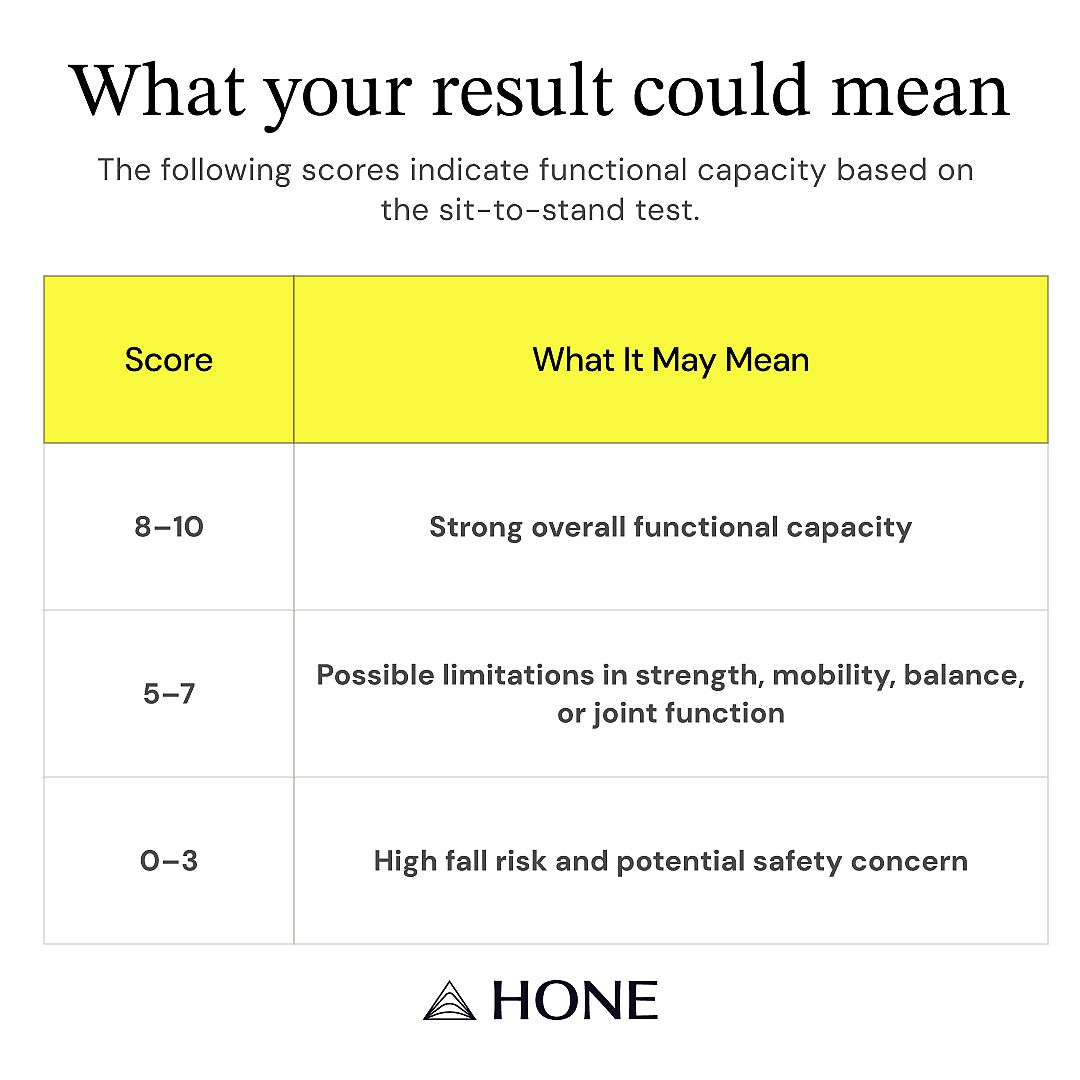
“If you scored lower than 5, if your performance has declined unexpectedly, or if it’s accompanied by muscle loss, fatigue, weakness, pain, or poor exercise recovery, talk to your doctor about underlying causes and treatment options,” Grabowski says.
If you struggled with this self-test and you don’t have an obvious injury, Grabowski would recommend body composition testing to look for low muscle mass and blood work to check for hormone imbalance or metabolic dysfunction, both of which can contribute to lower strength and energy.
2. 10-Second Single-Leg Balance Test
What it measures: How effectively the brain combines input from the eyes, inner ear, muscles, and joints to keep the body stable
Why it matters
Good balance leads to fewer injuries and greater independence as you age. In a British Journal of Sports Medicine study of about 1,700 adults ages 51–75, those who could balance on one leg for 10 seconds had a substantially lower risk of dying over the next seven years than those who couldn’t. They also tended to have lower rates of obesity, cardiovascular disease, unhealthy cholesterol, and type 2 diabetes.
How to do it
Stand upright with your feet together and hands at your sides. Lift one foot off the ground — ideally at least 12 inches — keeping your arms down and your gaze fixed straight ahead. Count how long you can hold the position without lifting your arms or lowering your raised foot. Repeat three times and average the results.
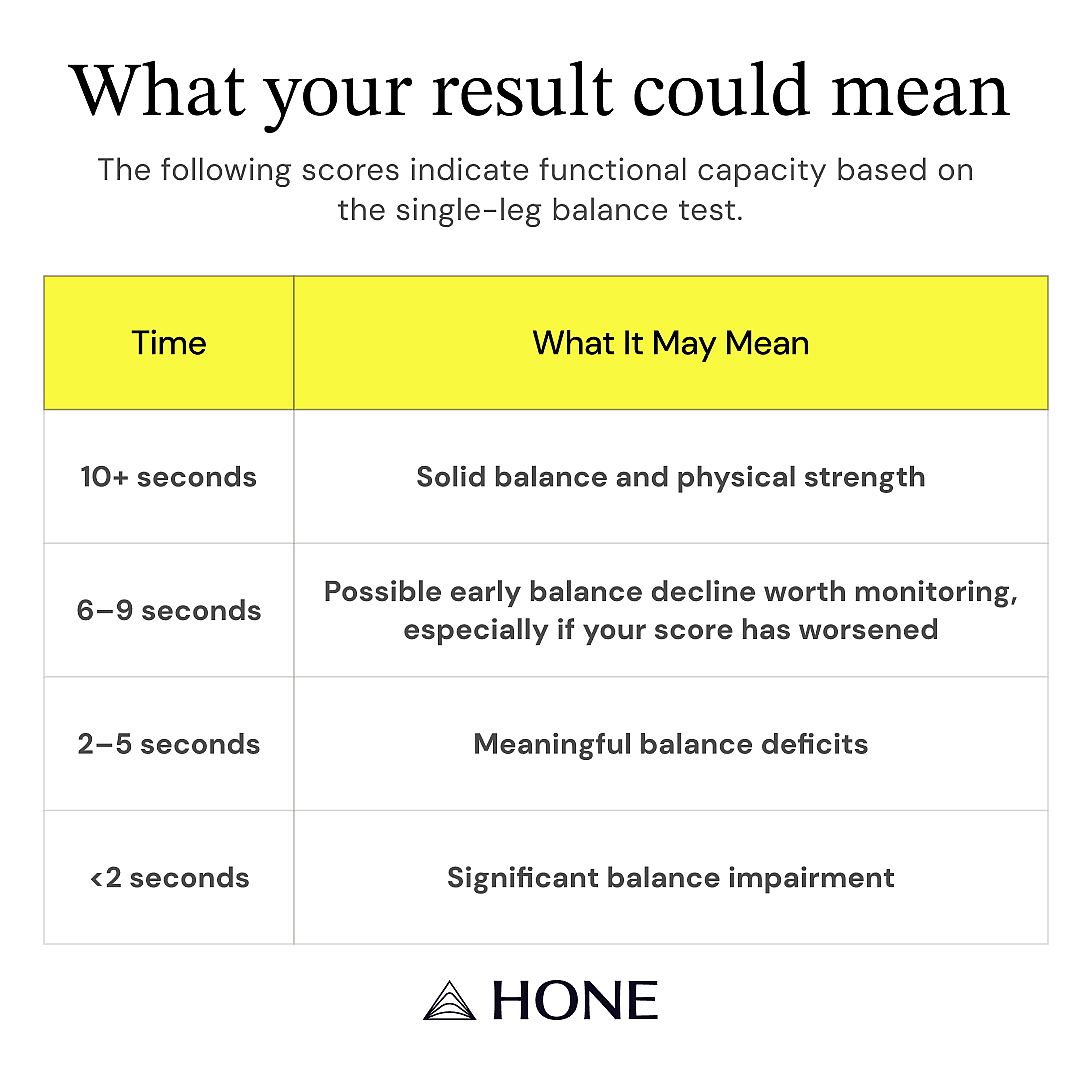
“Difficulty holding the position may reflect problems with strength, vision, sensation, ability to maintain equilibrium, or neuromuscular control,” Grabowski says. Bring a new or worsening balance problem to a clinician, particularly if it occurs along with dizziness, fainting, numbness, weakness, vision changes, or falls.
3. Grip Strength Test
What it measures: Grip strength reflects muscle force as well as whole-body muscle mass and quality, nervous-system function, nutritional status, and general health. A 2024 review in the Journal of Health, Population and Nutrition proposed adding the grip strength test to routine care as a clinical vital sign.
Why it matters
The weaker your grip, the older your biological age. In a study of 1,274 adults published in the Journal of Cachexia, Sarcopenia and Muscle, researchers measuring changes in DNA found that weaker grip strength was linked to faster aging at the cellular level. A separate study following nearly 140,000 adults found that weak grip strength was a better predictor of longevity factors such as cardiovascular disease, stroke, and heart attack than systolic blood pressure.
How to do it
The gold standard for measuring grip strength is a hand dynamometer, a device typically used in a doctor’s office. As a home proxy, perform a dead hang: Grip a secure pull-up bar with an overhand grip, arms extended, feet off the floor, and hold for as long as possible. This measures grip endurance relative to body weight, a slightly different but equally helpful metric.
What your result could mean
A hang time of 90 seconds to two minutes indicates excellent endurance, Grabowski says. A time of 30–60 seconds is a reasonable baseline to build from. Training history, body size, hand injuries, and arthritis can all influence the results of this longevity test. An unexplained decline — particularly when accompanied by muscle loss, fatigue, numbness, poor exercise recovery, or difficulty building muscle — is more telling than a result that has always been low.
“When someone’s grip is weaker than it should be for their age and activity level, there may be a hormonal driver like low testosterone or a metabolic driver like insulin resistance or prediabetes behind it,” Grabowski says.
4. Pushup Test
What it measures: Upper-body and core muscular endurance, strength relative to body weight, and the ability to sustain repeated effort
Why it matters
Pushups reflect the health of your cardiovascular system. In a 10-year JAMA Network Open study of 1,104 active male firefighters, those who completed more than 40 pushups had a 96% lower risk of cardiovascular events compared with those who completed fewer than 10. The study population was active men, so the 40-pushup threshold isn’t a universal benchmark — results vary by age, sex, body composition, and training background.
“A pushup recruits several large muscle groups at once, and increasing reps increases oxygen demand, forcing the heart to raise its cardiac output,” Grabowski explains. “The number of pushups you can do represents whole-body endurance and cardiorespiratory reserve.”
How to do it
Start in a high-plank position with hands approximately shoulder-width apart and your body in a straight line from head to heels. Lower your chest toward the floor and press back up — elbows facing down toward your feet, body line maintained throughout. Knee pushups are a valid option if you’re just starting to build upper-body strength.
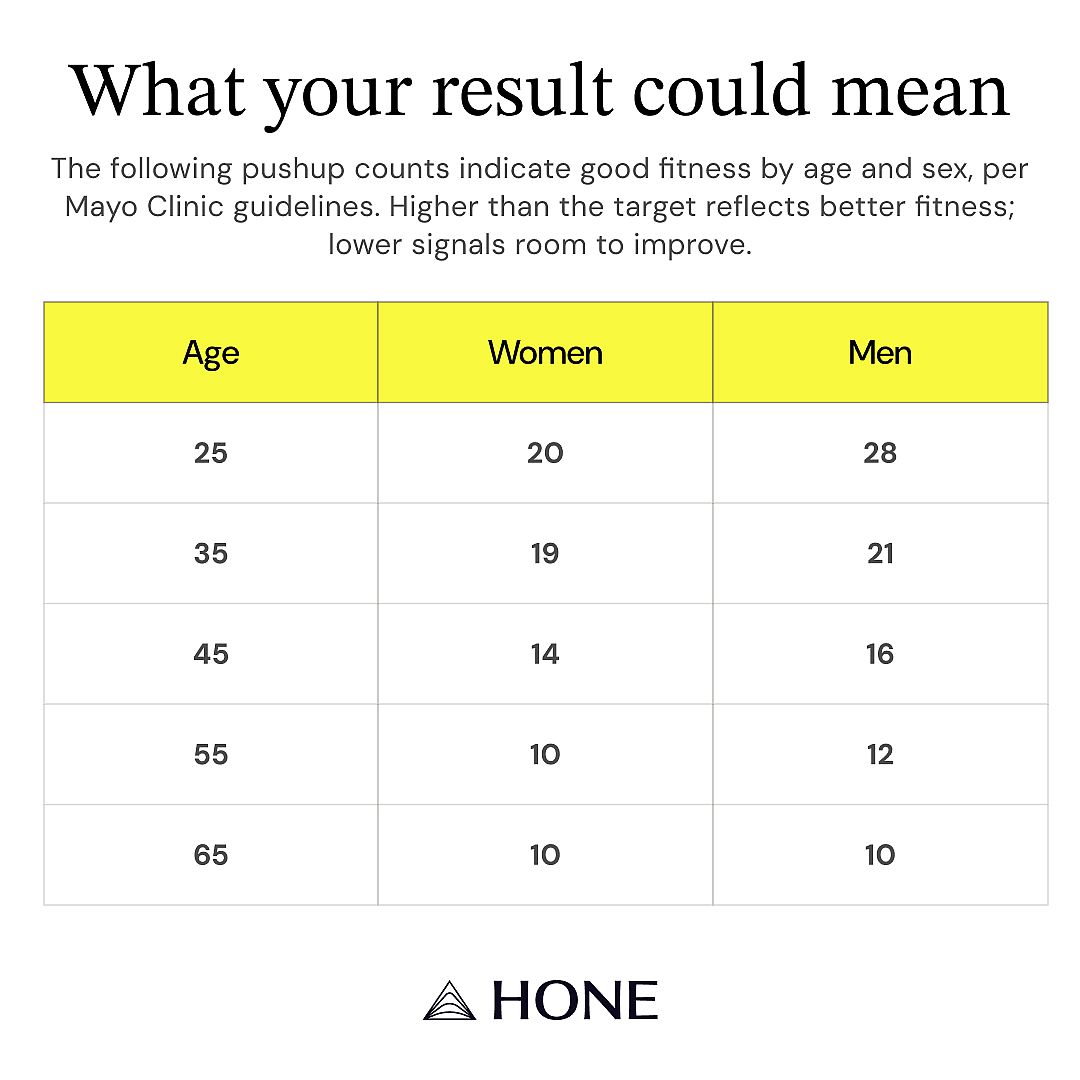
Again, an unexpected decline is more meaningful as a longevity test than a number that has always been low, according to Grabowski.
If your score has declined or you’re struggling to build strength, Grabowski would run cardio-metabolic and hormone panels to check for underlying issues. “Metabolic dysfunction — insulin resistance, diabetes, or pre-diabetes — will impact mitochondrial health, which will impact endurance and strength,” she says. “Low testosterone will lower muscle mass and also reduce stamina.”
5. 1.5–Mile Walk or Run Test
What it measures: How efficiently the cardiovascular system delivers oxygen to working muscles during sustained effort
Why it matters
Cardiorespiratory fitness is one of the strongest predictors of all-cause mortality in the published literature. A 2025 study in the American Journal of Preventive Medicine following nearly 80,000 adults over nearly 17 years found that brisk walking for as little as 15 minutes a day was associated with a nearly 20% reduction in total mortality, especially from cardiovascular-related causes.
How to do it
Find a flat 1.5-mile course — six laps on a standard quarter-mile track or about 30 city blocks — or use a GPS running app. After a brief warm-up, walk, jog, or run as fast as you can for the full distance. Record your time.
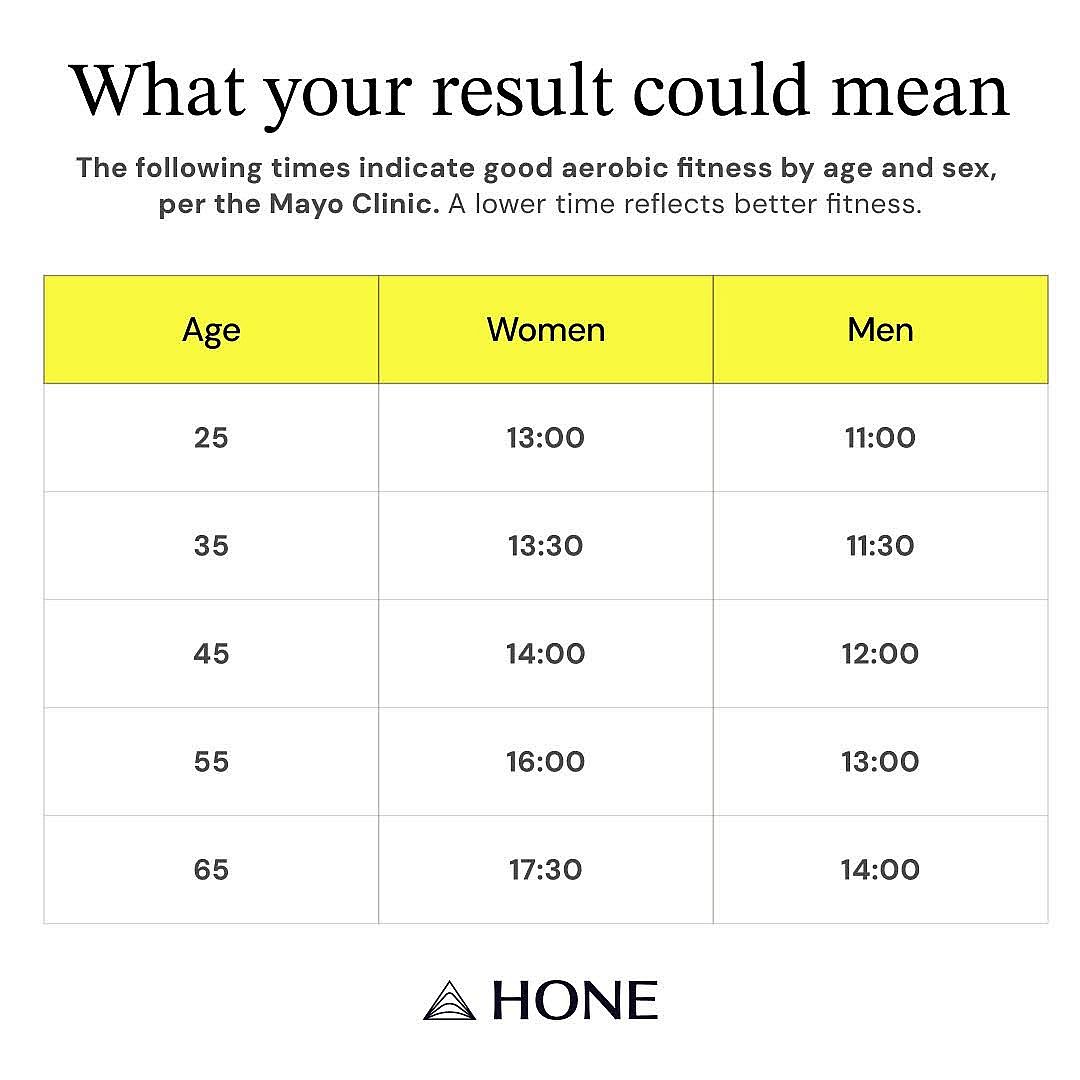
“Declining speed that’s not just from deconditioning often points to cardiovascular or metabolic changes we can address — sometimes with lifestyle measures, sometimes with treatment,” Grabowski says.
If your time is high for this longevity test, she recommends evaluating metabolic function, muscle mass, and testosterone levels as well as nutritional deficiencies, like in iron and B12, which might indicate anemia. “I might also order a lipid panel that can indicate whether atherosclerosis is contributing to shortness of breath and limited endurance,” she adds.
This story was produced by Hone Health and reviewed and distributed by Stacker.
