New tracking tool being deployed to preserve and protect Western Monarch butterflies locally

GOLETA, Calif. (KEYT) – Ultra-light tracking tags are being deployed for the first time locally on Western Monarch butterflies to monitor how and where these iconic creatures migrate.
The tracking project is being conducted by scientists with Althouse & Meade in coordination with the City of Goleta as well as Ellwood Friends with funding from the U.S. Fish and Wildlife Service.
The solar-powered BlūMorpho tags, developed by Cellular Tracking Technologies, use Bluetooth to transmit data to participants using the free Project Monarch app on their phones as well as the Motus Wildlife Tracking Network and weigh about as much as a grain of rice.

The Motus Wildlife Tracking System uses a network of radio towers to collect and transmit data already for a variety of tracked creatures and those existing towers are being retrofitted for the new butterfly trackers shared national conservation non-profit Monarch Joint Venture.
The latest trackers are notably lighter that previous versions and Dr. Lee Brown with James Madison University shared they have observed captured butterflies go through their entire life cycle wearing the trackers.
Eyelash glue keeps the trackers firmly attached to the invertebrates for their entire lives and the application process takes about seven minutes for a practiced attacher explained Helen St. John with James Madison University.
Earlier this month, The New York Times covered the use of the cutting-edge tracking technology now making its way to the west coast to track monarchs on their migration across parts of the eastern and central United States and southern Canada down to central Mexico where they spend the winter.
Where monarchs spend their winters is a notable difference between monarch migrations in the east and west.
Overwintering, or staying in one place to avoid the dangers of winter, sites in the west are more diffuse compared to the east and tend to be near the Pacific coast below 800 feet in elevation shared Monarch Joint Venture.
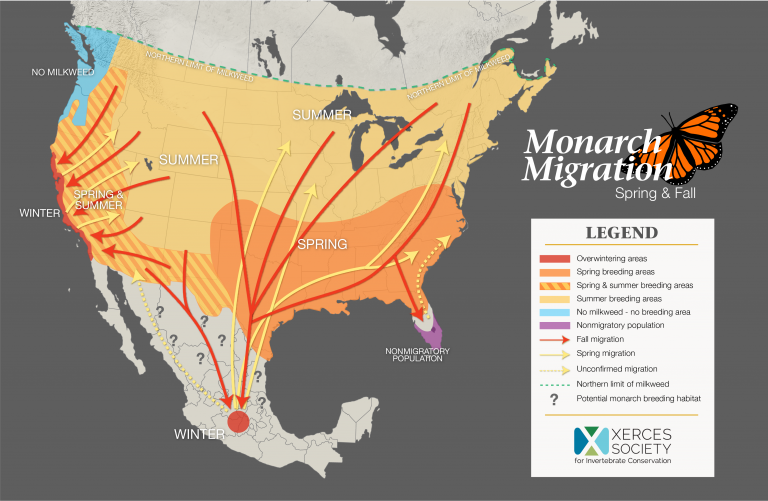
Preferred habitats for overwintering are often closely packed trees that protect the winged-insects from winter winds and the groves that provide the most protection are usually full of densely-packed clusters.

Western monarchs are facing stiff headwinds for their continued survival.
Late last year, the butterfly count at prominent local destinations for seasonal overwintering showed a dramatic drop in arrivals.
"Abysmal" is how George Thomson detailed the count last year to Your News Channel author and he noted that low population counts are not unique to the Central Coast.
According to the Xerces Society for Invertebrate Conservation, there were notably low counts across the wintering habitat for the Western Monarch Butterfly that stretches from northern Baja California and up to Marin and Sonoma counties.
In January, the 28th annual Western Monarch Butterfly Count documented the second lowest overwintering population of western monarchs ever recorded since dedicated tracking of Western Monarchs began in 1997.
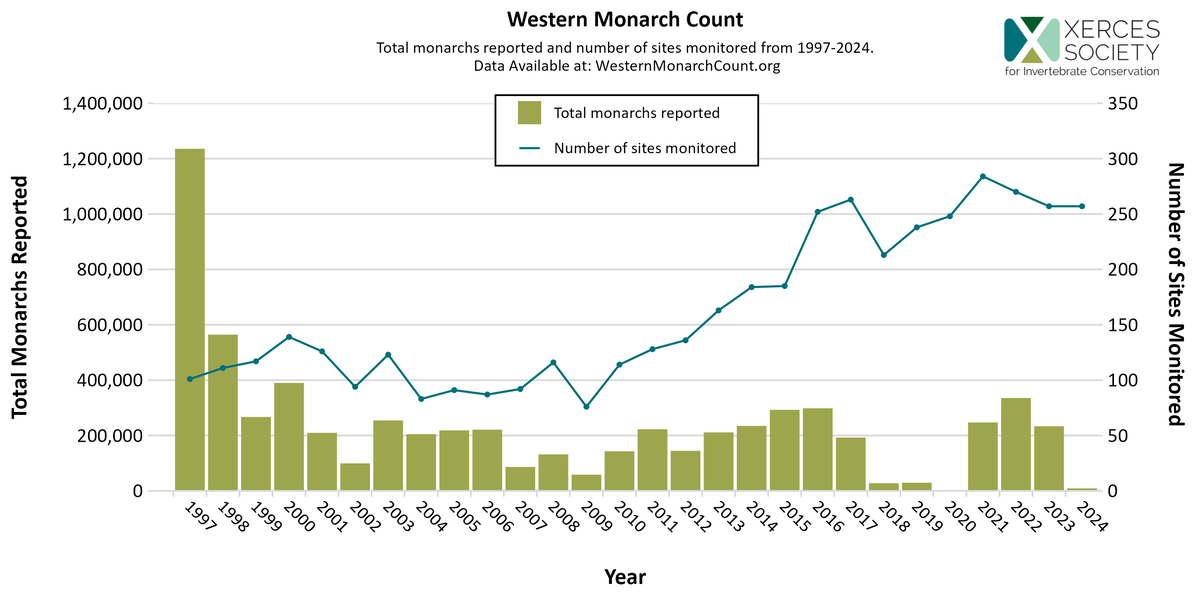
"The population’s size is extremely concerning," said Emma Pelton, an endangered species biologist with the Xerces Society for Invertebrate Conservation. "We know small populations are especially vulnerable to environmental fluctuations, and we think that’s what happened this year. The record high late summer temperatures and drought in the West likely contributed to the significant drop-off we saw in the third and fourth breeding generations."
The total number of Western Monarch Butterflies has decreased by an estimated 95 percent since the 1980s and experts believe that may be due to increased heat as well as wildfires and severe storms in the migratory insects preferred wintering spots detailed the City of Goleta.
The new tracking technology is expected to fill in the gaps between recording numbers at overwintering sites annually in order to help protect the iconic invertebrates.
According to the latest federal Species Status Assessment, the Western Monarch butterfly has a greater than 95 percent chance of extinction by 2080.